Where Does Our Food Waste Go? From Clean Plates to Clean Communities
Where Does Our Food Waste Go? From Clean Plates to Clean Communities
Every kitchen has small leftovers: vegetable peels, fruit skins, tea leaves, yesterday’s rice, a piece of bread that was not eaten, or food that has simply been left too long.
We often call it “waste” the moment it leaves the plate or kitchen.
But where does our food waste actually go?”
That is a simple question, yet the answer connects our homes with the roads outside, waste collection systems, soil, water and the places where we live.
This year’s World Cleanup Day, observed on 20 September 2026, puts food waste in focus with the theme “From Clean Plates to Clean Cities.”
For me, it is a useful reminder that keeping a place clean is not only about picking up what has already been thrown away. It is also about thinking a little earlier — about what we buy, what we use, what we leave behind and what happens next.
World Cleanup Day 2026 Begins With a Question From the Kitchen
World Cleanup Day is often associated with people coming together to clean streets, public spaces, neighbourhoods, forests, beaches and other places affected by litter and mismanaged waste. But cleanup is only one part of the story.
The UN’s 2026 focus on food waste asks us to look at something much closer to home: what happens to food that we do not eat?
That makes the subject less about one particular cleanup day and more about everyday life.
- A clean street is good.
- A clean stream is good.
- A clean village road is good.
But preventing some of the waste from reaching those places in the first place is even better.
There Is No Real “Away” When We Throw Food Away
We sometimes speak about throwing something “away” as though it disappears.
It doesn’t.
Once food leaves our kitchen, it still has somewhere to go. Depending on the local system, it might be collected with other household waste, separated for organic processing, composted or, unfortunately, dumped where it should not be.
The exact journey is different from one place to another.
That is why understanding our own local waste system matters.
The important thing is to remember that the end of our responsibility is not necessarily the moment the waste leaves our hand.

What Happens to Food Waste?
When Food Is Still Edible
Not everything we are about to throw away is necessarily waste.
Sometimes it is simply food that was bought in excess, cooked in excess or forgotten.
Planning meals, storing food properly and using leftovers can prevent perfectly usable food from becoming waste.
This is probably the simplest place to begin because it avoids creating waste in the first place.
When Food Becomes a Food Scrap
Vegetable peels, fruit skins, tea leaves and other suitable organic scraps are different from plastic wrappers or other non-organic waste.
Where practical, organic material can be composted or handled through an appropriate organic-waste system.
Composting is not simply putting food into a pile and forgetting about it. It works best when the right materials, moisture, air and conditions are maintained.
But where composting is practical, it can return organic matter to the soil instead of treating it as something with no further use.
When Food Enters the Waste System
If food waste is collected as part of a managed waste system, its next step depends on the facilities and practices available locally.
This is why segregation matters.
When different kinds of waste are mixed together, useful materials can become more difficult to recover or process.
India’s Solid Waste Management Rules, 2026 provide the current national framework for solid waste management.
When Waste Is Simply Dumped
This is where a small amount of household waste can become part of a much bigger environmental problem.
Food waste dumped in unsuitable places can attract animals and pests, create unpleasant odours and contribute to unhealthy surroundings.
When waste is mixed with plastics and other materials, the problem becomes even harder to manage.
A stream, roadside, forest edge or empty piece of land should not become the place where a household’s waste problem ends.
Why Food Waste Matters Beyond the Kitchen
Food does not appear on a plate by itself.
It has travelled through farms, soil, water, labour, transport, storage, markets and kitchens before reaching us.
When food is wasted, the resources used along that journey are also partly wasted.
The scale is considerable.
UNEP’s Food Waste Index estimates that 1.05 billion tonnes of food were wasted in 2022 across households, food service and retail. That was about 19% of the food available to consumers.
These numbers are global. They do not tell us what happens in one particular village or household.
But they do help us understand why food waste is not just a kitchen issue.
It is also a resource issue.
And it is an environmental issue.
How Can We Reduce Food Waste at Home?
Buy What We Can Use
Before buying more, it helps to look at what is already at home.
A little planning can prevent food from sitting unused until it has to be thrown away.
Store Food Properly
The way food is stored can make a big difference to how long it remains usable.
Knowing what needs refrigeration, what should remain dry and what should be used first can help reduce unnecessary waste.
Use Leftovers
Yesterday’s food does not automatically have to become today’s waste.
Leftovers can sometimes become another meal, depending on the food and how safely it has been stored.
This is not about making every household follow the same routine. It is simply about noticing what we already have before preparing or buying more.
Separate Food Scraps
Where a local waste system supports segregation, food scraps should be kept separate from materials such as plastic and other non-organic waste.
This makes it easier for the appropriate waste stream to handle each material.
Compost Where It Makes Sense
For households with the space, knowledge and suitable conditions, composting can be one useful way to handle appropriate organic waste.
It does not have to be the solution for everyone.
The better solution is the one that works realistically for the household and the local system.
What Does This Mean for Villages and Communities?
Waste does not look the same everywhere.
A household in a village may have different food habits, space, gardens and waste arrangements from a household in a city apartment.
That is why environmental conversations should not assume that one solution will work everywhere.
Some households may have space for composting.
Others may depend entirely on local collection.
Some may already find useful ways of using food scraps.
Others may have limited options.
The important question is not:
“Why aren’t all households doing the same thing?”
A better question is:
“What is a practical way to reduce and manage waste where we live?”
That question leaves room for local knowledge, local infrastructure and community participation.
A Cleaner Community Begins Before the Cleanup
Cleanup campaigns are valuable.
They bring attention to places that have been neglected and remind us that public spaces belong to all of us.
But perhaps the more useful lesson is what happens after the cleanup is finished.
If the same waste returns a week later, we have cleaned the symptom without addressing the habit or system behind it.
Reducing waste, separating it properly, reusing what can be reused and handling organic waste responsibly are quieter actions.
They may not make for dramatic photographs.
But they matter.
A cleaner community is not created only by the people who pick up litter.
It is also created by the people who think twice before creating it.
A Small Question to Carry Beyond World Cleanup Day
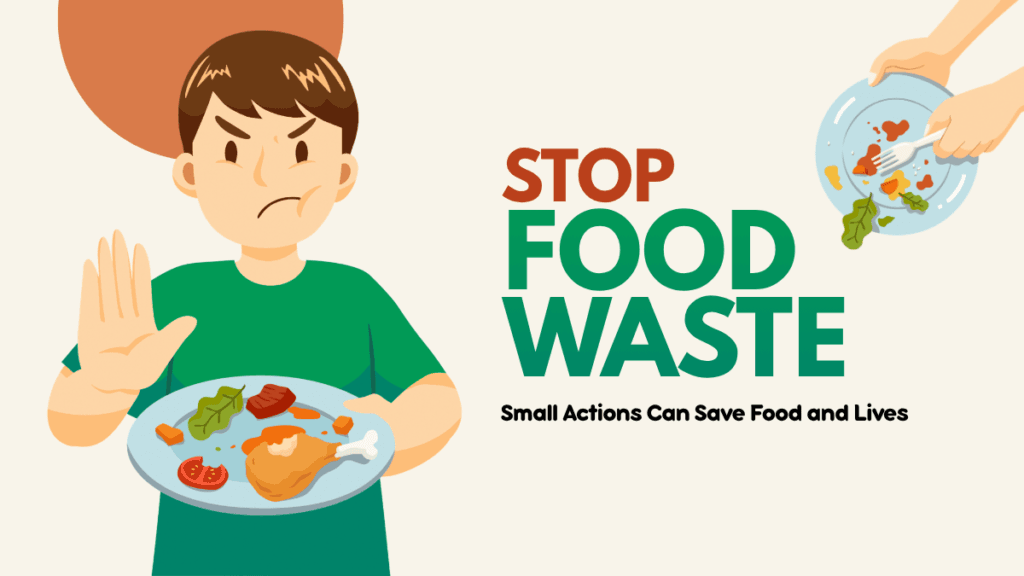
The next time you are about to throw food away, perhaps pause for a moment and ask:
Could this have been avoided?
Could I have bought less?
Could I have stored it differently?
Could I have used the leftovers?
Could the food scrap be handled separately?
Could it become compost or be managed through the local organic-waste system?
These are small questions.
But environmental responsibility often begins with small questions repeated every day.
World Cleanup Day gives us a date to think about waste.
The real work continues long after the day is over.
Conclusion
Food waste may begin with something as ordinary as a leftover on a plate, but its journey does not end when we put it in the bin.
What happens next depends on our choices, our local waste systems and the way our communities manage what they no longer need.
This World Cleanup Day, perhaps the most useful thing we can do is look at waste a little differently.
Not as something that simply disappears.
But as something that goes somewhere.
And if we can reduce what we waste, use what we already have and handle what remains more responsibly, our surroundings have a better chance of staying cleaner — not just on one cleanup day, but throughout the year.
How does your household handle food scraps?
Do you reuse leftovers, compost, separate organic waste, or have another way of managing it?
Share your experience in the comments. Everyday practices can teach us a lot about the places we live.
Frequently Asked Questions
What is World Cleanup Day
World Cleanup Day is observed annually on 20 September and brings attention to waste, litter and cleanup efforts around the world. It encourages people, communities and organisations to take action for cleaner surroundings and greater awareness of how waste is managed.
What is the World Cleanup Day 2026 theme?
The 2026 focus is food waste, with the theme “From Clean Plates to Clean Cities.” The theme encourages us to look beyond cleanup itself and consider how we prevent, reduce and manage food waste in our homes and communities.
Why is food waste an environmental issue?
Food requires land, water, energy, labour, storage and transport before it reaches our plates. When food is wasted, many of the resources used along that journey are also wasted. Food waste can therefore have environmental impacts beyond the kitchen.
Can food waste be composted?
Many suitable food scraps, such as fruit and vegetable peels, can be composted when the right conditions are available. What can be composted depends on the composting method and local system, so it is important to follow the guidance appropriate for where you live.
What is the simplest way to reduce food waste?
A simple place to start is to buy according to what the household can realistically use, store food properly and make use of suitable leftovers. Small habits such as checking what is already at home before shopping can also help prevent unnecessary food waste.
How Can We Reduce Food Waste at Home?
We can reduce food waste at home by buying only what we are likely to use, storing food properly, checking what is already available before shopping, using suitable leftovers, and separating food scraps for composting or the appropriate organic-waste system where available. Small, consistent changes can help prevent food from becoming waste in the first place.