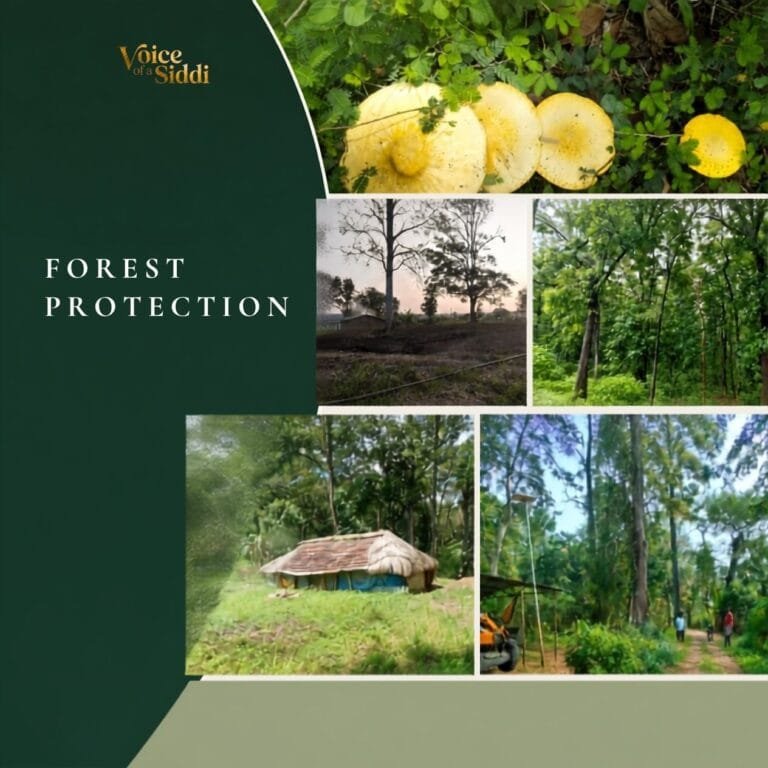
What Is a Food Forest? Growing Food While Protecting Nature
Imagine walking into a forest where almost every plant has a purpose.
A forest that gives—not just shade, but food, medicine, biodiversity, livelihoods, and life.
This is the idea behind a Food Forest: growing diverse, useful plants together in a way that works with nature rather than against it.
High above your head, tall trees form a canopy and provide shade. Beneath them, smaller fruit trees grow. Shrubs fill the spaces between the trees, while herbs and vegetables grow closer to the ground. Climbers use trees and other natural structures for support, and plants such as ginger and turmeric grow beneath the soil. Flowers bring colour to the forest and provide food for bees, butterflies, and other pollinators.
Nothing grows in isolation.
Each layer is connected to the others, creating a diverse and living ecosystem. One forest. Many layers. Many purposes. A thriving ecosystem.
This is the idea behind a food forest.
A food forest is a way of growing food by observing and imitating the natural structure of a forest. Instead of clearing large areas of land and planting only one crop in straight rows, a food forest brings together different types of plants that can grow alongside one another.
Tall trees, fruit trees, shrubs, herbs, vegetables, root crops, climbers, and ground-cover plants can all occupy different spaces within the same growing system.
The aim is not to create a traditional forest and simply hope that food grows naturally. A food forest is carefully planned and designed to combine food production with ecological principles. The plants are selected according to the local climate, soil, water availability, and the needs of the community.
For example, a tall tree may provide shade for plants that cannot tolerate strong sunlight. Fallen leaves can add organic matter to the soil. Flowering plants can attract bees and other pollinators. Certain plants may help protect the soil, while others provide food, medicine, spices, or materials.
In this way, a food forest can become much more than a place where food is grown.
It can become a living system where people, plants, soil, insects, animals, and nature support one another.
Unlike a conventional farm that may depend heavily on a single crop, a food forest encourages diversity. This diversity can provide different types of food throughout the year while creating habitat for wildlife and supporting a healthier ecosystem.
At its heart, a food forest asks us to look at food production differently.
Instead of asking:
“How can we make nature fit our farming system?”
we begin to ask:
“How can we design our food system to work more closely with nature?”
That is the foundation of a food forest.
A Forest That Feeds People
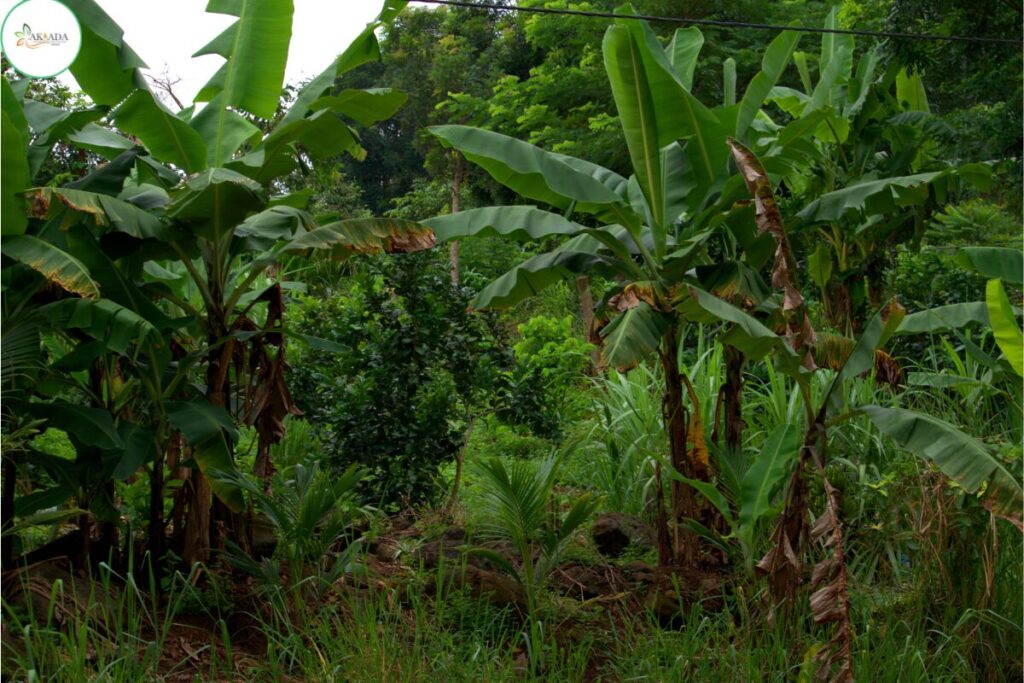
A food forest can provide many different types of food from the same growing space. Instead of depending on a single crop, a food forest brings together a variety of plants that can produce food at different times of the year.
Tall fruit trees may provide mangoes, jackfruit, guavas, avocados, or other seasonal fruits. Smaller trees and plants such as bananas can grow beneath the canopy. Shrubs, herbs, vegetables, spices, climbers, and root crops can occupy the spaces between them.
This creates a multi-layered food system where plants grow at different heights and use sunlight, space, and soil in different ways.
A food forest may include:
🌳 Fruit and native trees – providing fruits, shade, habitat, and other useful resources
🍌 Bananas and other perennial plants – providing food while growing for several years
🌿 Herbs and medicinal plants – supporting household use, traditional knowledge, and potential livelihoods
🥬 Vegetables – providing fresh food for families and communities
🌱 Root crops – such as turmeric, ginger, and other crops that grow beneath the soil
🌶️ Spices and useful plants – which can provide food, flavour, medicine, and opportunities for value-added products
🌸 Flowering plants – attracting bees, butterflies, and other pollinators
🐝 Plants that support pollinators – helping maintain the natural processes that support both wild plants and food production
The diversity of plants can also help provide food during different seasons. While one fruit tree may produce its harvest during the summer, another plant may provide vegetables, roots, herbs, or fruits at a different time of the year.
This means that a food forest does not depend entirely on one harvest.
If one crop is affected by pests, disease, extreme weather, or other challenges, other plants may still continue to grow and produce food. This diversity can help create a more resilient food system.
However, the purpose of a food forest is not simply to plant as many different species as possible.
Each plant can have a role within the ecosystem.
Some plants provide food. Some provide shade for plants that prefer cooler conditions. Some help protect the soil from direct sunlight and heavy rainfall. Some produce flowers that attract bees and butterflies. Others contribute organic matter when their leaves fall and decompose.
Certain plants may also help create conditions that benefit other plants growing nearby.
Over time, these relationships can create a more connected and productive growing system.
For example, a tall tree can provide shade for smaller plants. The leaves that fall from the tree can eventually break down and add organic matter to the soil. Flowering plants can attract pollinators, which help plants produce fruits and seeds. Ground-cover plants can help protect the soil from drying out.
In a natural forest, different plants occupy different layers and niches. A food forest takes inspiration from these natural relationships and adapts them to grow food and other useful plants.
Instead of separating food production from the natural environment, a food forest brings the two together.
The result is a diverse growing system that can provide food, support biodiversity, protect the soil, create habitat for wildlife, and contribute to a healthier ecosystem.
A food forest can therefore be more than a place where food is grown.
It can become a living, productive ecosystem—one where the health of the soil, plants, insects, animals, and people are all connected.
🌱 The more diversity a food forest supports, the more opportunities it can create for both nature and the communities that depend on it.
Food Forests Support Biodiversity
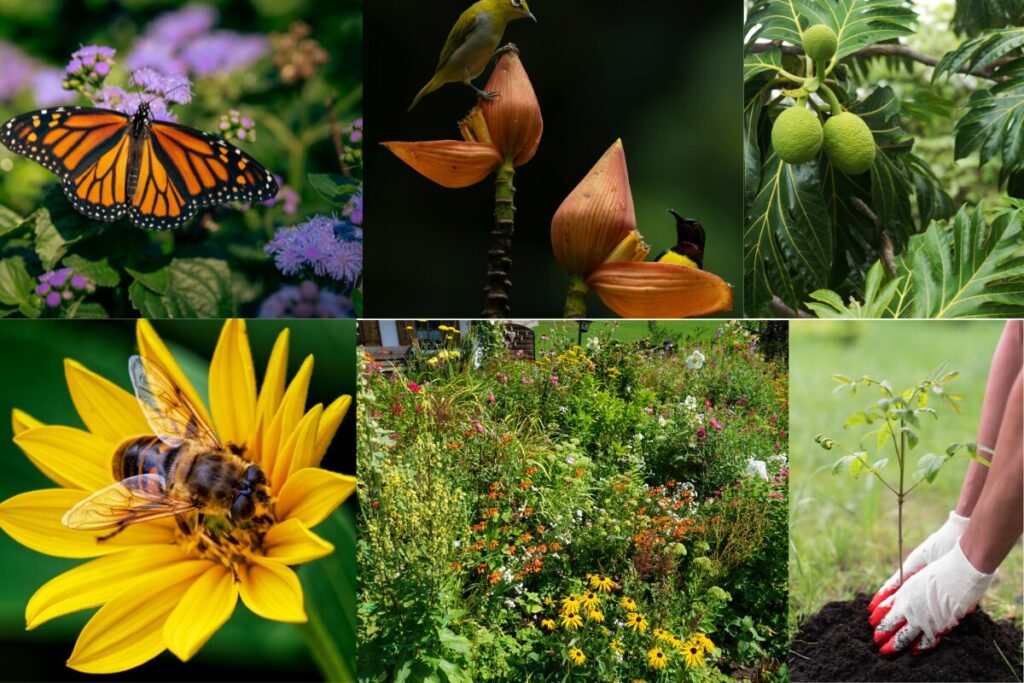
A food forest is not only about growing food for people. It can also create a habitat that supports a wide variety of plants, insects, birds, and other living organisms.
This variety of life is known as biodiversity.
In a conventional system where only one crop is grown across a large area, there may be limited food and shelter available for wildlife. A diverse food forest, on the other hand, can provide many different types of plants and habitats within the same space.
Flowering plants provide nectar and pollen for bees, butterflies, and other pollinators. Trees and shrubs can provide shelter and nesting spaces for birds and small animals. Different plants also attract a variety of insects, which form an important part of the food chain.
The more diverse the plant life, the more opportunities there are for different species to live and interact within the ecosystem.
🐝 Supporting Pollinators
Bees and other pollinators play an important role in food production.
When bees visit flowers to collect nectar and pollen, they can transfer pollen from one flower to another. This helps many plants produce fruits and seeds.
A food forest can support pollinators by providing flowering plants during different seasons. This can help create a more continuous source of food for bees and other pollinating insects.
A healthy population of pollinators can benefit both the food forest and the surrounding environment.
🦋 Creating Habitat for Wildlife
A food forest can provide more than food.
The different layers of vegetation can create places for wildlife to live, feed, and shelter.
Tall trees can provide nesting and resting spaces for birds. Dense shrubs can offer protection to smaller animals. Ground-cover plants can create habitats for insects and other small organisms.
Even fallen leaves and branches can play an important role. As they decompose, they become part of the natural cycle that returns nutrients to the soil and supports organisms living in the soil.
🌱 Diversity Creates a Healthier Ecosystem
Every living organism in an ecosystem is connected in some way.
Plants provide food and shelter. Insects pollinate flowers and become food for birds and other animals. Birds and animals can help spread seeds. Decomposing leaves and organic matter return nutrients to the soil.
These relationships create a natural web of life.
By encouraging a greater variety of plants and living organisms, a food forest can help create a more resilient and balanced ecosystem.
A food forest therefore does not simply produce food.
It creates space for life.
When we grow food with biodiversity in mind, we are not only feeding people—we are also creating conditions where nature can thrive.
Healthy Soil, Healthy Future
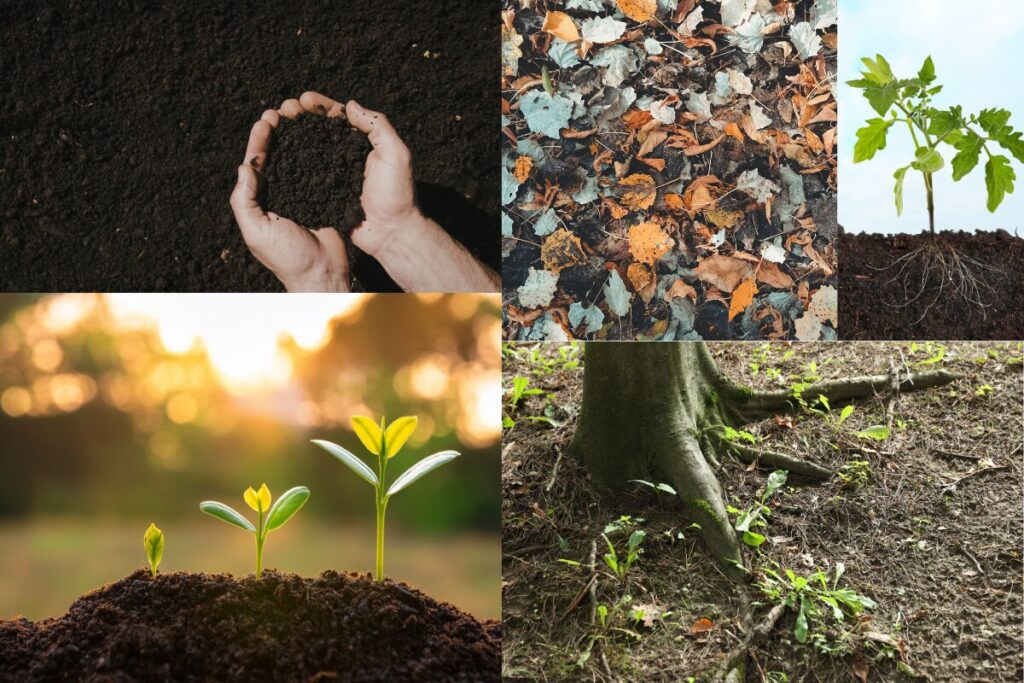
Healthy soil is one of the most important foundations of a food forest.
Without healthy soil, plants struggle to grow, water is not used efficiently, and the entire ecosystem becomes weaker. A food forest aims to build and protect the soil by working with natural processes rather than constantly disturbing them.
In a natural forest, the soil is rarely left completely bare.
Leaves fall from the trees. Small branches and other organic materials return to the ground. Over time, these materials decompose and become part of the soil.
This natural process helps return nutrients to the earth.
A food forest can follow the same principle.
🌿 Protecting the Soil
The different layers of plants in a food forest can help protect the soil from the effects of heavy rain, strong sunlight, and wind.
Plant roots help hold the soil together. Ground-cover plants can help reduce direct exposure to the sun and help the soil retain moisture.
When the ground is covered with vegetation or organic material, it is less vulnerable to erosion.
This is especially important during heavy rainfall, when exposed soil can easily be washed away.
🍂 The Natural Cycle of Organic Matter
Fallen leaves and other plant material are not simply waste.
As they decompose, they become part of the natural nutrient cycle.
The process is simple:
Plants grow → leaves and organic matter return to the ground → microorganisms break them down → nutrients return to the soil → new plants grow.
This cycle continuously connects plants, soil, microorganisms, and the wider ecosystem.
In a food forest, allowing natural organic matter to remain on the ground can help support this process.
🪱 Life Beneath the Soil
Healthy soil is alive.
It contains earthworms, fungi, bacteria, insects, and many other organisms that play important roles in breaking down organic matter and supporting plant growth.
These organisms help create a living soil ecosystem.
The healthier the soil ecosystem, the better the conditions can be for plants to grow.
This is why soil should not be viewed simply as a medium that holds plants in place.
Soil is a living part of the food forest.
🌍 Building a Long-Term Food System
A food forest is designed with the long term in mind.
Instead of constantly removing nutrients from the soil without returning anything, it aims to create a more natural cycle where organic matter and nutrients are continually returned to the growing system.
Healthy soil can help support healthy plants.
Healthy plants can provide food, habitat, shade, and organic matter.
This creates a cycle that connects the health of the soil with the health of the entire food forest.
When we protect the soil, we are investing in the future of the food forest.
Using Resources Wisely
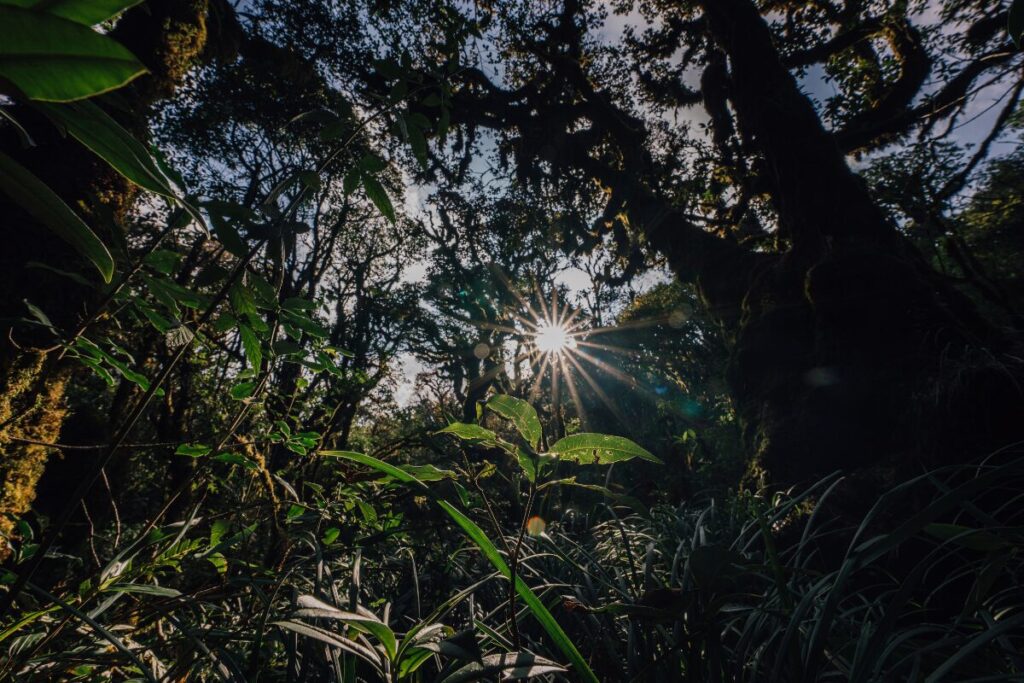
A food forest can also help us think differently about how we use natural resources such as sunlight, water, soil, and space.
In a natural forest, plants do not all grow at the same height. Tall trees form the upper canopy, while smaller trees, shrubs, herbs, climbers, and ground-cover plants occupy the layers below.
A food forest can use a similar approach.
Instead of leaving large areas of land unused beneath tall trees, different plants can be selected to grow in spaces where they are best suited.
☀️ Making Use of Sunlight
Tall trees receive the strongest sunlight.
The plants growing beneath them may receive partial shade. Some plants grow best in full sunlight, while others prefer cooler, shaded conditions.
By selecting plants according to their sunlight requirements, a food forest can make use of different levels of light within the same area.
This allows a variety of plants to grow together rather than competing for exactly the same conditions.
💧 Using Water More Efficiently
Plants with different root systems can also use water at different depths in the soil.
Some plants have shallow roots, while others send their roots deeper into the ground. This creates a more complex growing system where plants interact with different layers of the soil.
Ground-cover plants and organic matter on the soil surface can also help reduce the amount of moisture lost directly to the sun.
The shade created by trees and other vegetation can help create a cooler environment for plants growing beneath them.
🌱 Making Better Use of Space
A food forest can produce food from different vertical layers.
For example:
🌳 Tall canopy trees can provide fruits and shade.
🌴 Smaller trees can produce additional fruits.
🌿 Shrubs can grow in the spaces between trees.
🌱 Herbs and vegetables can occupy lower layers.
🫘 Climbers can use trees and other structures for support.
🥔 Root crops can grow beneath the soil.
🍃 Ground-cover plants can help protect the soil surface.
This means that a single area can support a wide variety of plants.
🌍 Working With Natural Processes
The goal of a food forest is not to eliminate the need for planning or care.
Instead, it is about designing a growing system that works more closely with natural processes.
When plants are selected according to their needs and their relationship with other plants is considered, the available sunlight, space, soil, and water can be used more thoughtfully.
A food forest shows us that sustainable growing is not always about using more resources.
Sometimes, it is about understanding the resources we already have and using them more wisely.
By working with nature rather than constantly trying to control it, food forests can create productive and diverse growing systems.
Food Forests and Sustainable Livelihoods
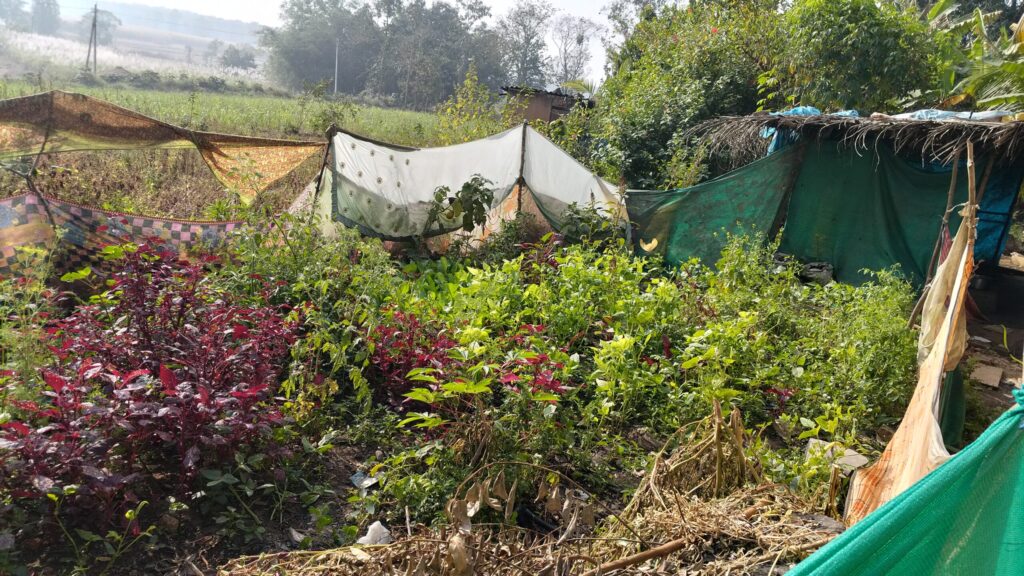
For rural and forest-dependent communities, a food forest can offer much more than food.
It can become a foundation for sustainable livelihoods.
A carefully planned food forest can provide a variety of products and opportunities throughout the year. Fruits, vegetables, herbs, spices, medicinal plants, seeds, and other natural products can be used by families, sold in local markets, or developed into value-added products.
This diversity can help communities reduce their dependence on a single source of income.
🌾 From Food Production to Livelihoods
A food forest can support several livelihood activities, including:
🍎 Fruit and vegetable production
🌿 Medicinal and aromatic plants
🐝 Beekeeping and honey production
🌱 Nurseries and plant propagation
🌶️ Spices and natural products
🍯 Value-added food products
🏡 Agro-tourism and homestays
🌳 Nature-based experiences
Different activities can develop around the same ecosystem.
For example, flowering plants can support bees. Bees can support beekeeping and honey production. Visitors may be interested in learning about the food forest, beekeeping, local food, and the community’s relationship with nature.
In this way, one food forest can create several connected opportunities.
👩🏾🌾 Creating Opportunities for Communities
A food forest can also become a space for learning and participation.
Women and young people can take part in activities such as:
Planting and caring for crops
Managing nurseries
Processing food products
Beekeeping
Packaging and marketing
Guiding visitors
Developing nature-based enterprises
When communities have the opportunity to participate in different parts of the value chain, the benefits of the food forest can extend beyond the harvest itself.
🌳 Building Sustainable Livelihoods
A sustainable livelihood is not only about earning an income today.
It is also about creating opportunities that can continue into the future without damaging the natural resources on which the community depends.
Food forests can help connect:
Healthy ecosystems → Food production → Skills → Livelihoods → Community resilience
When nature is protected, it can continue to provide resources and opportunities.
When communities benefit from protecting nature, conservation can become part of the livelihood system.
This creates a positive relationship between environmental protection and community development.
🌱 A Living Classroom
A food forest can also become a place where knowledge is shared.
Children and young people can learn about plants, soil, biodiversity, food production, and the importance of protecting nature.
Communities can share traditional knowledge about local plants and natural resources while also exploring new opportunities for sustainable enterprise.
A food forest can therefore become a living classroom, a source of food, and a foundation for sustainable livelihoods.
For communities such as the Siddi community, whose lives and cultures have deep connections with nature and the forest, these approaches can create opportunities while respecting the importance of the natural environment.
At AKSSADA, we believe that conservation and livelihoods do not have to be separate goals.
With the right knowledge, planning, and community participation, it is possible to create opportunities that support both people and nature.
A healthy food forest can feed a family, support biodiversity, create livelihoods, and inspire the next generation.
Our Vision for Food Forests
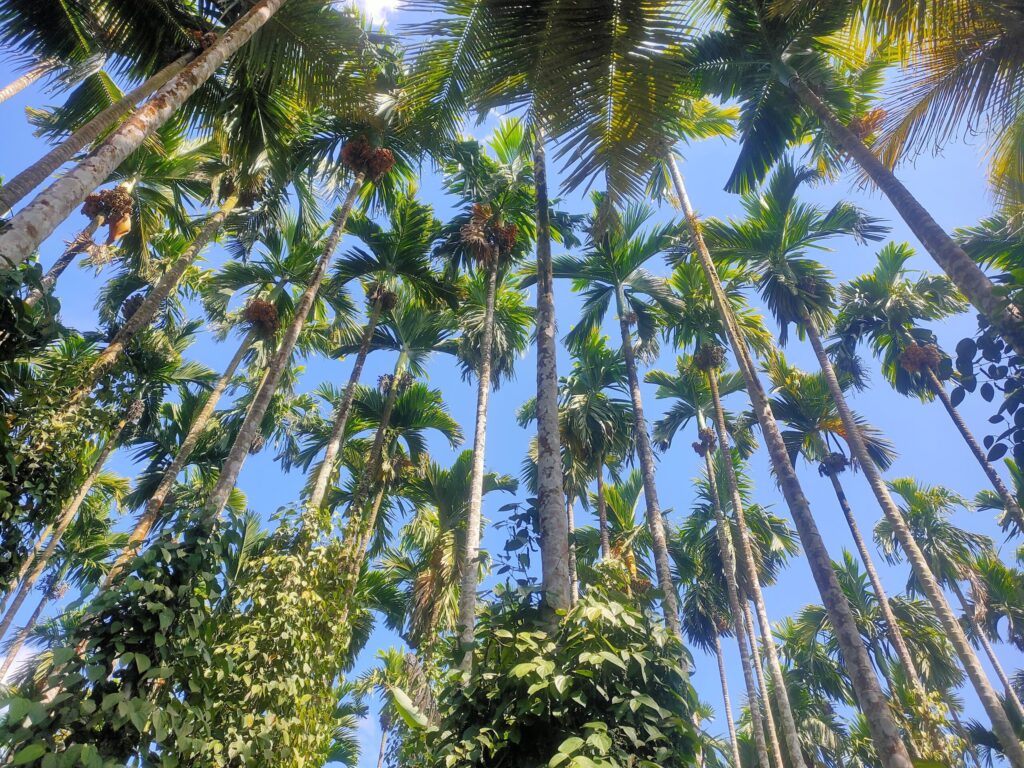
At AKSSADA, we believe that protecting nature and creating sustainable livelihoods can go hand in hand.
Our vision for food forests is not simply about planting trees or growing food.
It is about creating living systems that can support communities while protecting the natural environment.
A food forest can become part of a larger vision for communities that are:
🌱 Growing food sustainably
🐝 Supporting pollinators
🌳 Protecting biodiversity
♻️ Improving soil health
👩🏾🌾 Creating sustainable livelihoods
🏡 Developing responsible agro-tourism and homestays
🌍 Building a more resilient future
Food forests can also be connected with other sustainable activities.
Beekeeping can support pollination and honey production. Composting can help return organic matter to the soil. Nurseries can provide plants for future food forests. Agro-tourism and homestays can create opportunities for visitors to learn about local food, culture, and nature.
Each activity can support another.
This is the kind of connected approach that can help create stronger and more resilient communities.
A food forest is not just a place where food grows.
It can be a place where people learn, work, create livelihoods, protect biodiversity, and build a deeper relationship with nature.
At AKSSADA, we believe that sustainable development should be built around the strengths and knowledge of communities.
When people are given the opportunity to develop sustainable livelihoods while protecting their natural surroundings, both the community and the environment can benefit.
The future we imagine is one where:
🌱 Food production protects the soil.
🐝 Livelihoods support biodiversity.
🌳 Communities protect nature.
👩🏾🌾 Sustainable opportunities create hope for the future.
A food forest is one step towards that vision.
People and nature do not have to grow separately. They can grow together.