Forest Protection: Why Protecting Forests Matters for People, Communities and the Future
Forest Protection: Why It Matters for People, Communities & the Future
Forests are often described as the lungs of our planet, homes for wildlife, and vital ecosystems that help support life on Earth. All of this is true. But for people who live close to forests, a forest means far more than what we see from the outside.
A forest can be a source of food, medicine, water, livelihoods, and shelter. It can be part of a community’s history, culture, and identity. It can also be a living classroom where knowledge about plants, animals, seasons, farming, and nature is passed from one generation to the next.
For communities such as the Siddi community of Karnataka, the relationship with the natural environment is closely connected to everyday life. The forests and rural landscapes surrounding their villages have shaped traditional livelihoods, cultural practices, and the way communities understand and interact with nature.
This is why forest protection cannot be viewed only as a matter of saving trees. Protecting forests also means protecting biodiversity, supporting the communities that depend on them, preserving traditional ecological knowledge, and creating sustainable livelihoods that allow people and nature to thrive together.
When we protect a forest, we are not simply protecting a landscape. We are protecting a living ecosystem, the knowledge held by its people, and the future of the communities that have grown alongside it.
What Is Forest Protection?
A forest is a living system. Trees, plants, insects, birds, animals, soil, water and microorganisms all depend on one another.
When one part of this system is damaged, the effects can spread.
Protecting forests helps maintain biodiversity, support water systems, protect soil and provide habitats for wildlife. Forests also help communities by providing resources and supporting agriculture and other livelihoods.
For people living close to forests, environmental changes can become part of everyday life.
A decline in forest health can mean fewer useful plants, changes in water availability, declining pollinator populations, reduced agricultural productivity or fewer opportunities to earn an income from nature-based activities.
So forest protection is not only an environmental issue.
It is also a community issue and a livelihood issue.
Forests Are Home to Biodiversity-Forest Protection
One of the most visible reasons for forest protection is the incredible variety of life they support.
A forest is not simply a collection of trees. It is an ecosystem made up of countless species that interact with one another.
Birds depend on trees for nesting. Insects pollinate plants. Animals spread seeds. Fungi and microorganisms help maintain healthy soil. Streams and water sources support both wildlife and people.
When forests are cleared or degraded, these relationships can be disrupted.
Forest protection therefore means protecting the entire ecosystem rather than focusing only on individual trees.
This is particularly important in biodiversity-rich regions such as the Western Ghats, where forests support a wide range of plants and animals.
Forest Protection and the People Who Live Around Forests
It is easy to talk about Forest Protection without talking about the people who live around them. For communities living close to forests, the forest is often part of everyday life — a source of food, livelihood, fuel, medicine and many other resources.
These communities also have their own knowledge and understanding of the environment. They may know when certain fruits appear, where particular plants grow, how the seasons affect agriculture, and where bees are likely to find flowers. Much of this knowledge is built through years of experience and passed from parents and grandparents to younger generations.
But traditional knowledge alone is not always enough. Forest protection also requires awareness, education and guidance.
People living in and around forests need to understand that a forest is not an unlimited source of resources. If trees are continuously damaged, branches are cut unnecessarily, young plants are destroyed, or forest produce is harvested without care, the forest can gradually lose its ability to regenerate.
People may not always realise that the resources they collect today may not be available to the next generation if the forest is not protected.
This is where the Forest Department has an important role to play. Regular awareness programmes and practical training can help local communities understand the importance of forests and learn simple ways to use forest resources without damaging them.
Teach Communities Why Forests Need Protection
Awareness should begin with a simple message: the forest we depend on today may not be there tomorrow if we do not take care of it.
The Forest Department, along with local organisations and community leaders, can conduct regular village-level awareness programmes explaining the importance of forests, biodiversity, water, wildlife and natural regeneration.
The aim should not be to frighten or blame people. Instead, people should understand the connection between the forest and their own future.
When a community understands that healthy forests support food, water, livelihoods and the well-being of future generations, forest protection becomes a shared responsibility.
Encourage Planting and Protecting Trees
Planting trees is important, but planting alone is not enough.
Communities should also be encouraged to protect existing trees and help young trees survive. Native species that are suitable for the local environment can be encouraged wherever tree planting is appropriate.
Children and young people can also be involved through school activities, village plantation drives and nature education programmes.
The message should be simple: planting a tree is only the beginning. A tree needs protection and care before it becomes part of a healthy forest.
Harvest Forest Fruits Without Damaging Trees- Forest Protection
Forest fruits can provide food and income, but harvesting needs to be done carefully.
People collecting fruits should be encouraged to avoid cutting branches simply to reach the fruit. Breaking or cutting branches can damage the tree and reduce its ability to produce fruit in the future.
Where possible, fruits should be collected using methods that minimise damage to the tree and allow enough fruit to remain for natural regeneration and wildlife.
This is a small change in practice, but repeated across a community, it can make a meaningful difference.
Collect Honey Without Destroying Bee Colonies
Honey collection also needs care.
Bees are important pollinators, and their presence is closely connected with healthy ecosystems. When collecting honey, people should be taught methods that minimise harm to bee colonies, avoid unnecessary damage to trees and allow colonies to continue thriving.
Instead of viewing the hive only as a source of honey, it is important to understand that the bees themselves are part of the forest ecosystem.
This is one reason training in responsible beekeeping and honey harvesting can be valuable for communities that depend on forest and agricultural landscapes.
Protect Young Trees and Natural Regeneration
A forest is not sustained only by its mature trees.
Young plants and seedlings are essential for the next generation of the forest. If young trees are repeatedly damaged by cutting, grazing, fire or other activities, the forest may struggle to regenerate naturally.
Communities can play an important role by identifying areas where young plants need protection and by avoiding unnecessary disturbance.
Protecting a small seedling today can mean protecting a large tree for future generations.
Prevent Forest Fires
Forest fires can cause enormous damage to vegetation, wildlife, soil and natural regeneration.
Awareness about preventing accidental fires should therefore be part of community education. People should understand the risks associated with burning waste, careless use of fire and activities that can allow flames to spread into forest areas.
Local communities can also be encouraged to report fires quickly so that action can be taken before they spread.
Make Forest Protection a Shared Responsibility
The Forest Department, local communities, schools, community organisations and environmental groups all have a role to play.
The Forest Department can provide knowledge, training and guidance. Community members can bring their local experience and participate in protection efforts. Organisations can help with awareness, livelihood programmes and capacity building.
Most importantly, local people should be treated as partners in forest protection, not simply as people who need to be controlled.
The goal is not to stop communities from using forest resources. The goal is to help them understand how those resources can be used responsibly without destroying the source itself.
Take from the forest with care. Give the forest a chance to regenerate. And leave it healthy for the next generation.
The Siddi Community and Its Connection With Nature
The Siddi community has a distinctive history and cultural identity in India, with significant settlements in parts of Karnataka, including Uttara Kannada.
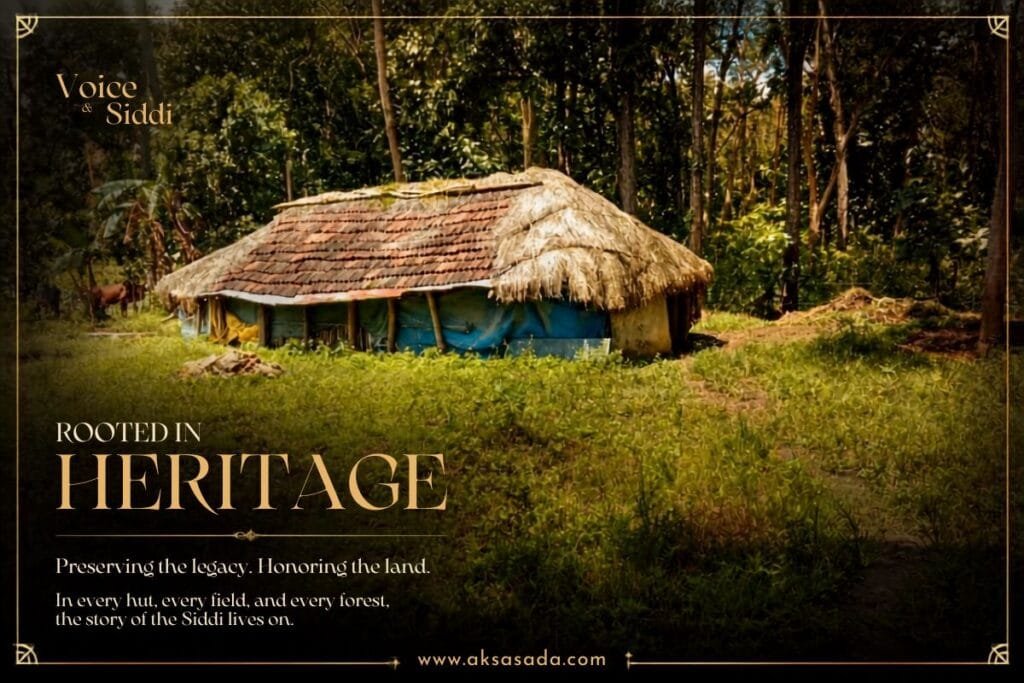
Many Siddi families have lived for generations in rural and forested landscapes where agriculture, forest resources, animal husbandry, wage work and other livelihoods form part of everyday life.
For the Siddi community, nature is therefore not something separate from society.
It is part of the landscape in which families have lived, worked and raised children.
This connection does not mean that every Siddi family has the same relationship with the forest. Communities change, livelihoods change and younger generations have new aspirations.
But the knowledge and cultural relationship with the natural environment remain important parts of the story.
And that story deserves to be heard when we talk about forest protection.
Traditional Knowledge Is Also a Form of Conservation
Sometimes conservation is discussed only in terms of government policies, protected areas, technology and scientific research.
These are important.But there is another form of knowledge that comes from living close to nature.
Traditional knowledge can help communities understand local plants, seasons, soil, water and wildlife.
An elder may know which plants are useful, when a particular fruit is available, how weather patterns affect crops or where bees are likely to find flowering plants.
This knowledge may never appear in a formal textbook. Yet it can be incredibly valuable.
Protecting forests should therefore also mean creating opportunities for this knowledge to be documented, shared and passed on to younger generations.
Forest Protection and Sustainable Livelihoods:
People need livelihoods. If forest protection is presented as simply telling communities what they cannot do, it can create conflict between conservation and everyday needs.
A better approach is to create livelihood opportunities that work with nature rather than against it.
This is where forest-based livelihoods can become important.
Activities such as beekeeping, sustainable agriculture, nurseries, food forests, responsible eco-tourism, animal husbandry and value addition can potentially create income while reducing pressure on natural resources when they are planned responsibly.
The objective is not to turn every part of a forest into an economic opportunity.
The objective is to help communities build secure livelihoods while recognising the limits of nature.
Forest Protection and Sustainable Livelihoods
People need livelihoods.
If forest protection is presented as simply telling communities what they cannot do, it can create conflict between conservation and everyday needs.
A better approach is to create livelihood opportunities that work with nature rather than against it.
This is where forest-based livelihoods can become important.
Activities such as beekeeping, sustainable agriculture, nurseries, food forests, responsible eco-tourism, animal husbandry and value addition can potentially create income while reducing pressure on natural resources when they are planned responsibly.
The objective is not to turn every part of a forest into an economic opportunity.
The objective is to help communities build secure livelihoods while recognising the limits of nature.
Beekeeping: A Livelihood Connected to the Forest
Beekeeping is one example of how livelihoods and forest protection can support each other. Bees need flowers. Flowers need healthy plants and a suitable environment. When people depend on bees for their livelihood, they have another reason to notice flowering plants, protect vegetation and understand the importance of pollinators.
For Siddi families, beekeeping can therefore offer more than an additional source of income. It can become part of a larger conversation about biodiversity and sustainable livelihoods.
AKSSADA’s work with beekeeping reflects this approach — building livelihood opportunities while maintaining a connection with the natural environment.
The aim is not simply to produce honey.
It is to build skills, create income and encourage a deeper understanding of the ecosystem that makes beekeeping possible
Food Forests: Growing More While Caring for the Land
Another idea closely connected with sustainable living is the food forest.
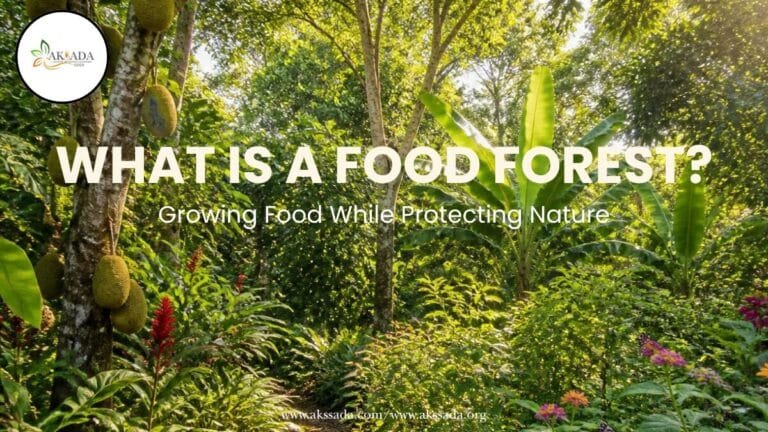
Instead of depending on a single crop, a food forest can combine different types of plants — such as fruit trees, vegetables, spices, herbs and other useful species — in a system inspired by natural ecosystems.
The exact design depends on the land, climate and local needs.
Food forests can provide food and potentially income while increasing plant diversity and creating habitat for insects and other organisms.
For communities looking for long-term livelihood options, they can also provide an opportunity to think beyond short-term production.
The question becomes:
What can we grow today that will continue to support the family and the land in the years ahead?
That is an important part of sustainable thinking
Women and Forest-Based Livelihoods-forest protection
Women are an important part of community development.
In many rural communities, women contribute to agriculture, livestock care, food processing, household income, traditional knowledge and community activities.
When women have access to training, Self-Help Groups, financial opportunities and markets, they can play a stronger role in building sustainable livelihoods.
For forest-dependent communities, this can create a positive connection between economic empowerment and environmental responsibility.
A woman who develops a small enterprise based on locally available resources, for example, can become not only an income earner but also a participant in decisions about how those resources are used.
Development is stronger when women are not treated simply as beneficiaries but as decision-makers and entrepreneurs.
Young People Have an Important Role to Play
Forest protection is also about the future.
Young people growing up in rural and forest landscapes are increasingly connected to the wider world through education, smartphones, social media and new career opportunities.
This is positive.
Young people should have the freedom to pursue education and careers beyond traditional livelihoods.
At the same time, they can play an important role in carrying local knowledge forward.
Digital storytelling, photography, documentation, eco-tourism, environmental education, entrepreneurship and technology can give young people new ways to connect their future with their community.
Imagine a young Siddi person using a mobile phone to document traditional knowledge, promote local products, tell community stories or educate others about the importance of forests.
That is also a form of forest protection.
Forest Protection Begins With Everyday Choices
Protecting forests is not only the responsibility of forest departments, environmental organisations or communities living near forests.
Individuals also have a role.
We can reduce unnecessary consumption, avoid waste, support responsible products, respect natural areas, avoid littering and learn more about the ecosystems around us.
When visiting forests, responsible behaviour matters.
Do not disturb wildlife. Do not leave plastic behind. Do not damage plants. Do not light fires where they are prohibited or unsafe.
Small actions may seem insignificant on their own.
But millions of responsible choices can create a culture that respects nature.
Community-Led Forest Protection Is the Way Forward
The strongest solutions are often built with communities rather than for communities.
Local people understand their landscape.
Organisations can bring training, resources and connections.
Government institutions can provide policies and support.
Researchers can contribute scientific knowledge.
Businesses can create responsible markets.
When these different strengths come together, forest protection can become part of a larger development strategy.
This is the kind of approach that can create lasting change.
At AKSSADA, the idea is not to separate livelihood development, culture and environmental protection into completely different boxes.
They are connected.
A stronger livelihood can reduce economic vulnerability.
A community with greater economic security can invest more in its future.
Young people with opportunities can become community leaders.
And communities that value their natural surroundings can become powerful partners in protecting them.
Sustainable Forest Management and the Future
Forest protection is closely connected with sustainable forest management.
The idea is simple: forests need to be managed in ways that consider environmental, economic, social and cultural needs.
There is no single solution that works everywhere.
A forest landscape in Karnataka will have different needs from a forest in another part of India or another part of the world.
That is why local knowledge, scientific understanding and community participation all matter.
The goal should be to leave future generations with forests that are at least as healthy and valuable as the ones we inherited.
What Can We Do for Forest Protection?
There is no single action that will protect every forest.
But we can start with a few basic principles:
Protect existing forests. Prevent unnecessary destruction and degradation.
Respect biodiversity. Forests are homes for many species, not just sources of timber or other resources.
Support sustainable livelihoods. Communities need economic opportunities that do not depend on destroying natural resources.
Value local knowledge. People who live close to forests have knowledge that should be respected and included.
Empower women and youth. They are essential to the future of community-led conservation.
Teach children about nature. A connection with nature developed early can become a lifelong responsibility.
Work together. Government, communities, organisations, researchers and citizens all have a role.
Conclusion: Protecting Forests Means Protecting Our Future
Forest protection is ultimately about more than trees.
It is about water, wildlife, soil, climate, food, livelihoods and people.
It is about preserving places where generations have lived and learned.
It is about recognising that communities such as the Siddi community have knowledge, experiences and aspirations that belong in the conversation about conservation and development.
And it is about creating a future where people do not have to choose between earning a livelihood and caring for nature.
The path forward is not to stop communities from developing.
It is to create better ways of developing — ways that respect forests, strengthen livelihoods, value culture and give young people a reason to believe in their future.
When we protect a forest, we are not only protecting what exists today.
We are protecting the possibilities of tomorrow.
That is why forest protection matters — for nature, for communities and for generations yet to come.