
Table of Contents
ToggleA Small Step Forward: 3 Months of Beekeeping Progress in the Siddi Community
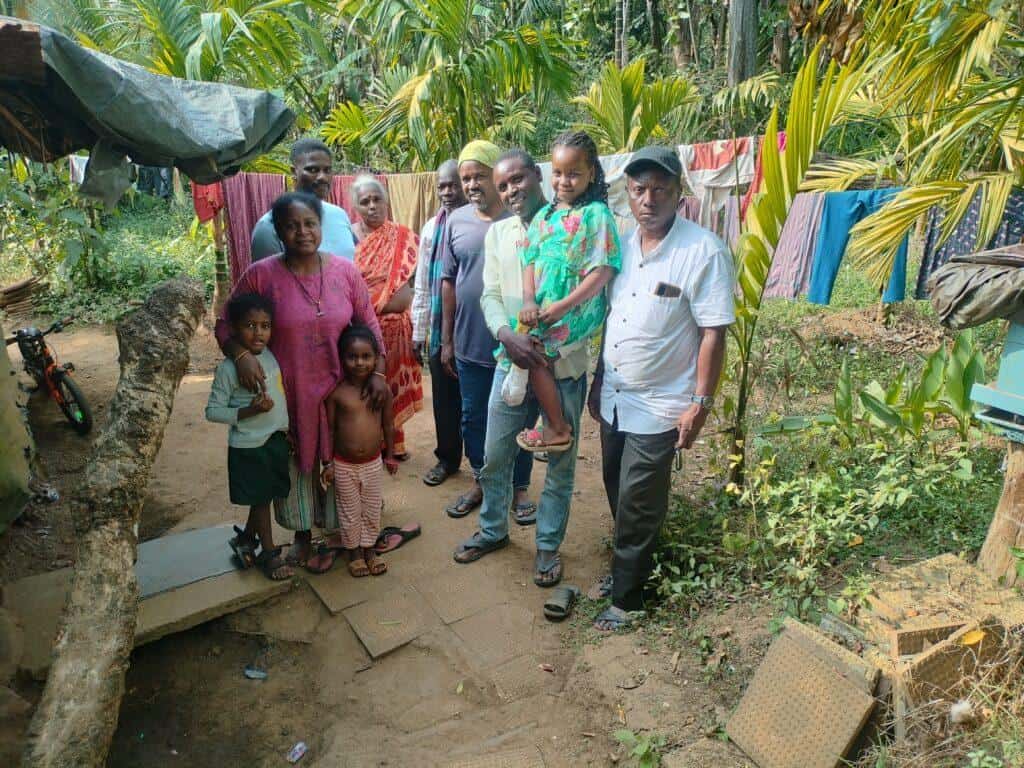
It has now been three months since our first visit to Ravi’s home deep in the forest. As we look back today, that day feels very vivid—almost like it happened yesterday.
We still remember the long drive through the forest, the narrow road leading to his home, and the warmth with which Ravi and his family welcomed us. At that time, he had just four bee boxes, placed carefully near the edge of the forest. He had the knowledge and the willingness to work, but limited resources held him back from moving forward.
What started then as a simple conversation about possibilities and support has, over the past three months, slowly taken shape into something real and meaningful.
Today, as we reflect on that first visit, we feel both encouraged and hopeful—not just by the progress we see, but by the journey that began with a single step and a shared belief that change, however small, is possible.
During our initial visit, Ravi had four active bee boxes. He had the knowledge, training, and willingness to work, but like many others, he faced limitations due to lack of resources. Expanding beekeeping requires investment—additional boxes, colonies, and basic equipment—and these were not easily affordable for him. As a result, his work remained at a small scale despite his capability and interest.
At the same time, we too were facing our own constraints. As an organization, AKSSAD is still growing, and we do not have large funding or financial backing. Every step we take requires careful planning, small contributions, and a lot of personal effort. Supporting even one family is not easy when resources are limited, but we strongly felt that if we could take a small step in the right direction, it could create meaningful change.
With this shared understanding, we decided to support Ravi in a practical and sustainable way, within our capacity. With the limited funds available through AKSSAD, we were able to provide him with 10 live bee boxes. This may seem like a modest intervention, but for us, it was a significant commitment. It marked not just an increase in numbers, but the beginning of trust, confidence, and momentum.
Today, Ravi has a total of 14 live bee boxes. More importantly, he has taken the initiative to expand the colonies on his own. Using his training and experience, he has been carefully working on colony division and growth. This has become a crucial step, as expanding colonies independently helps reduce costs significantly. Otherwise, purchasing new colonies from external beekeeping vendors would require continuous financial investment—something neither he nor we can sustain easily at this stage.
We are also beginning to see how this approach can create a larger impact. The more colonies we are able to expand on our own, the lower the cost becomes for each new setup. This means we will be able to support more families with the same limited resources, helping them start or grow their beekeeping activity in a more sustainable and affordable way.
This journey reflects a shared effort—where limited resources on both sides have not stopped progress, but instead encouraged us to find practical, sustainable ways to move forward, step b
Beekeeping :Expanding Colonies, Building a Path Toward Sustainability
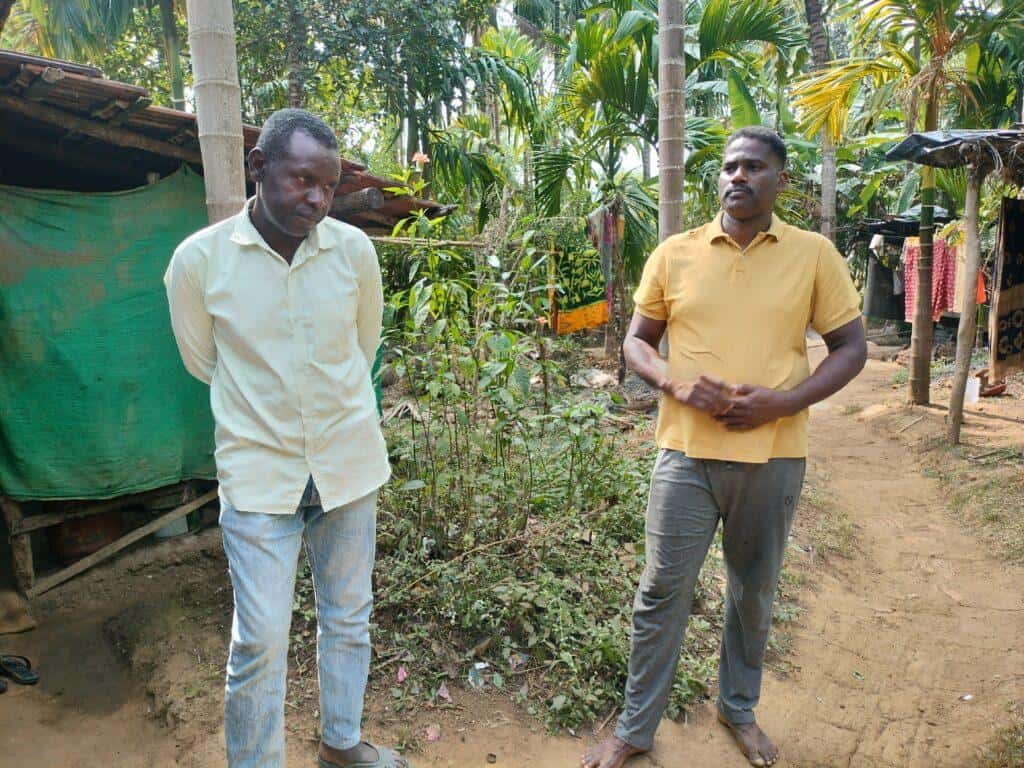
Today, Ravi has a total of 14 live bee boxes, a significant step forward from where he began a beekeeping journy. More importantly, he has taken the initiative to expand the colonies on his own. Being trained and experienced in beekeeping, he understands the process of colony division and has been carefully applying this knowledge in practice.
Colony expansion is not a simple or quick process—it requires patience, observation, and proper timing. Ravi has been regularly monitoring the health of each colony, ensuring that the bees are active, the queen is strong, and the conditions inside the box are suitable for growth. Only when a colony is healthy and stable can it be divided to form a new one. This careful approach helps avoid losses and ensures that both the original and new colonies continue to thrive.
This development is especially important because it directly reduces the cost of expansion. Normally, purchasing new bee colonies from external beekeeping vendors involves continuous financial investment, which can be a major barrier for families with limited resources. In our case, the initial funding provided by AKSSAD helped Ravi build a strong foundation by increasing the number of active boxes.
However, the long-term goal has always been sustainability rather than dependence. By focusing on colony expansion from existing hives, Ravi is gradually reducing the need to purchase new colonies. This not only saves money but also gives him greater control over the process, allowing him to grow at his own pace based on available resources and seasonal conditions.
Over time, this approach creates a self-sustaining model, where one healthy colony can lead to the growth of multiple colonies. It also opens the possibility of supporting others in the future, as locally expanded colonies can be shared or distributed within the community at a much lower cost Beekeeping.
Ravi’s efforts clearly show that with the right knowledge, patience, and support, even a small beginning can grow into a sustainable livelihood. His progress is not just about increasing the number of bee boxes, but about building a system that can continue to grow independently over time.
Reviving Discarded Bee Boxes: Turning Waste into Opportunity for Beekeeping
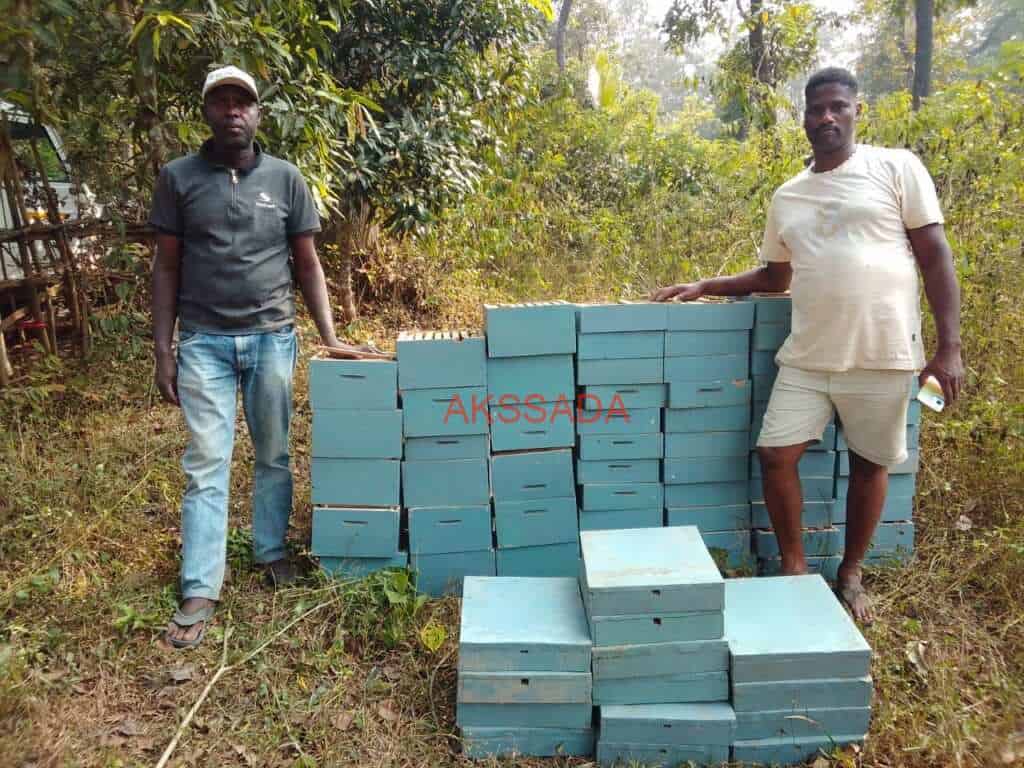
Another encouraging development in this journey has been the availability and use of empty bee boxes that were earlier discarded. We were able to source around 50 bee boxes that had been lying unused in a godown for a long time. Most of these boxes were in poor condition—broken, worn out, and no longer considered usable.
Instead of seeing them as waste, Ravi saw an opportunity. With his basic carpentry skills, he took the initiative to repair and restore these boxes. He carefully examined each one, fixing damaged parts, reinforcing weak joints, and making small adjustments wherever required to make them functional again. This process required time, effort, and patience, but it significantly reduced the need to purchase new boxes.
This step has been especially important because the cost of new bee boxes can be a major barrier for expansion. By reusing and repairing discarded boxes, Ravi has been able to prepare additional space for new colonies at a very minimal cost. These restored boxes are now actively being used for colony expansion, directly supporting the growth of his beekeeping activity.
Beyond cost savings, this effort reflects a strong sense of resourcefulness and ownership. It shows how local skills and practical thinking can play a crucial role in building sustainable livelihoods. What was once considered unusable has now become an important part of this growing journey.
Expanding the Vision: Supporting More Families and Creating Livelihood Opportunities
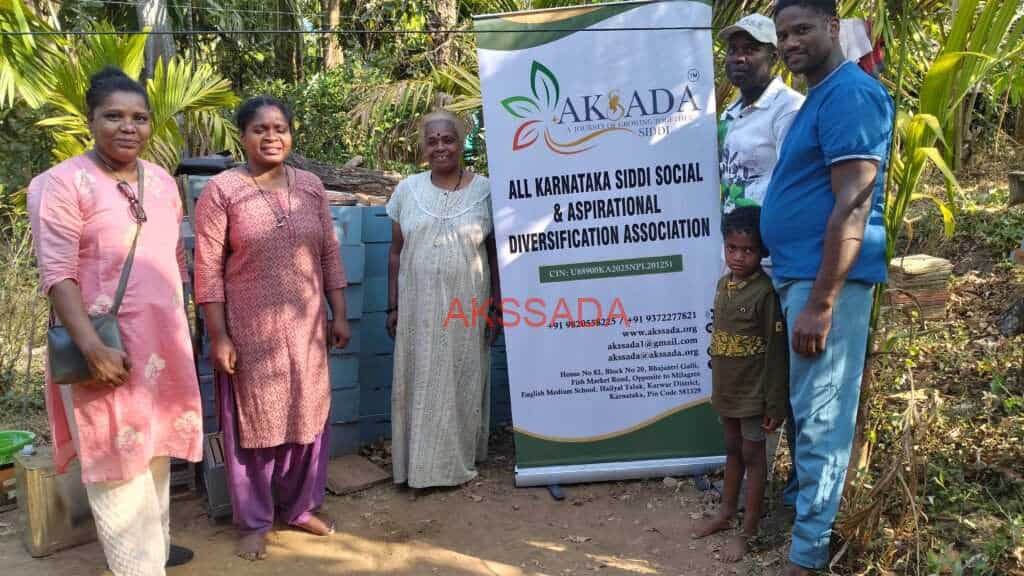
Our vision now is to expand this effort and reach more families within the community. The progress we have seen so far has given us confidence that beekeeping can become a meaningful and sustainable source of livelihood when the right support is provided at the right time.
Many families we have interacted with are either already practicing beekeeping on a very small scale or are interested in starting. However, due to financial limitations, they are unable to move beyond one or two bee boxes. For most, this remains a small activity or hobby rather than a reliable source of income.
Through this initiative, we aim to bridge that gap by providing initial support such as bee boxes, live colonies, and basic equipment. This kind of support can help families take the first step toward scaling their efforts, allowing them to gradually build a more stable and consistent source of income. The goal is not just to provide resources, but to enable families to grow independently over time.
At the same time, we also see potential in promoting wild honey collection as an additional livelihood opportunity. Many individuals already have knowledge of the forest and traditional practices, but lack proper tools and safety gear. By equipping them with basic protective equipment and training, we can help make this activity safer, more efficient, and more rewarding.
Together, these efforts can create multiple pathways for income generation—through both managed beekeeping and responsible wild honey collection. This approach not only strengthens livelihoods but also builds confidence within the community, encouraging more people to participate and benefit from these opportunities.
Small Steps, Shared Responsibilityour Heading Text Here
This update marks three months since our first visit, and while the journey is still in its early stages, the direction is becoming clearer with each passing day. What we have seen so far has strengthened our belief that with the right support, guidance, and active community participation, beekeeping can grow into a truly viable and sustainable livelihood option.
The progress may appear small from the outside, but on the ground, it represents something much deeper—growing confidence, renewed hope, and the willingness of families to take ownership of their future. Each additional colony, each repaired box, and each effort made by Ravi and his family reflects a step toward self-reliance.
At the same time, this journey has also shown us the challenges that still remain. There are many more families who are willing to work and learn, but are held back only due to lack of basic resources. With the right support at the right time, these small beginnings can grow into sustainable sources of income for many.
As we move forward, we remain committed to continuing this effort—step by step, family by family. We will keep sharing updates, not just to document progress, but to build awareness and encourage collective support for such initiatives.
We also invite those who believe in creating meaningful, grassroots change to walk with us in this journey. Whether through support, collaboration, or simply by sharing this story, every contribution matters. Together, even small efforts can create lasting impact and open new opportunities for communities that are ready to grow but need a helping hand.
Each step we take, no matter how small, brings us closer to building a stronger, more self-reliant community—one where opportunities are created not just for today, but for the future.
we will keep you updated on this progress story from time to time and request like minded people to join us in this journy.