How Self Help Groups Can Transform the Lives of Siddi Women A Roadmap for Awareness, Action & Community-Led Impact
The Siddi community—India’s unique Afro-Indian tribal group—has historically faced social and economic challenges rooted in marginalization, limited access to opportunities, and geographic isolation. Within this context, Siddi women often carry a double burden: managing households with restricted income sources while remaining excluded from formal financial systems and decision-making spaces.
Community-based platforms such as Self Help Groups (SHGs) hold immense potential to change this reality. When understood and managed well, SHGs can become tools for financial independence, skill development, leadership, and collective dignity. However, this potential is not always realised in practice.
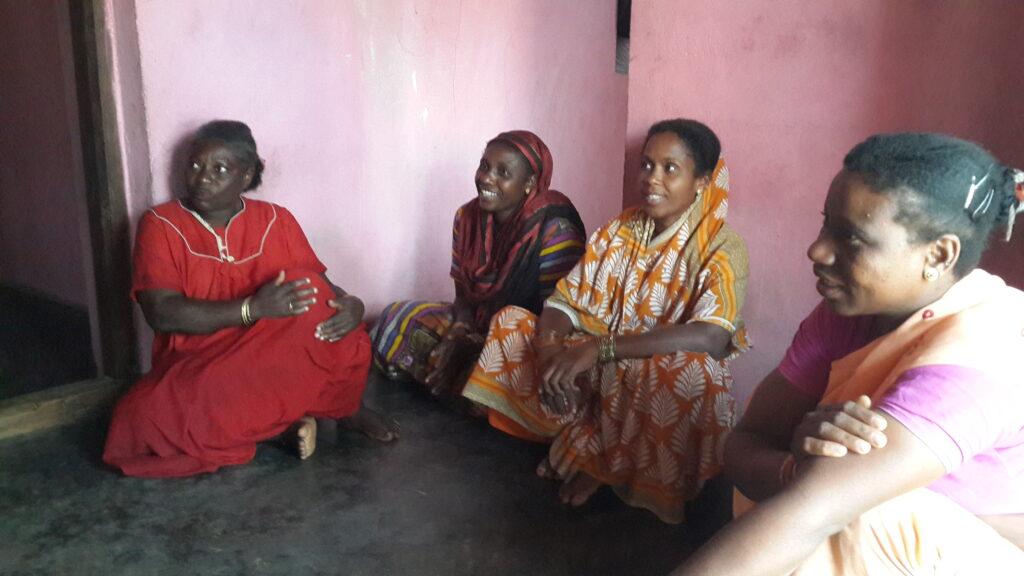
Ground Reality: What We Observed in Siddi Villages about self help groups
During recent visits to several Siddi villages, I had the opportunity to interact closely with women who are members of existing Self Help Groups. These interactions were informal, open, and based on trust. On the surface, the presence of SHGs in many villages suggests active participation and inclusion.
Yet, deeper conversations revealed a different picture.
Most groups were functioning primarily as monthly savings and internal lending units. While this is a necessary foundation, many members were unaware that SHGs are also meant to support income-generation, skill building, collective enterprises, and access to development programs. As a result, the scope of Self Help Groups had unintentionally narrowed to basic financial transactions.
In several cases, record-keeping was minimal or informal. Savings and loans were tracked through memory or occasional notes rather than structured registers. This was not due to negligence, but rather limited exposure to basic financial literacy and accounting practices, making transparency and clarity difficult.
Some women also shared that loans were taken without clear planning or repayment timelines, leading to delayed repayments. Over time, this placed pressure on collective savings and discouraged responsible members from continuing in the group, fearing shared liability for unresolved dues. In a few instances, this led to misunderstandings and internal disagreements. These challenges do not indicate failure of the Self Help Groups model or shortcomings of institutions. Instead, they clearly highlight the need for sustained awareness, capacity-building, and hand-holding, especially for marginalized communities.
What Is a Self-Help Group (SHG)?
A Self-Help Group (SHG) is a small, voluntary association—usually consisting of 10 to 20 members, most often women—who come together for mutual financial support and collective empowerment.
A Self-Help Group (SHG) is a small, voluntary association—usually consisting of 10 to 20 members, most often women—who come together for mutual financial support and collective empowerment.
• Core Characteristics of an Self Help Groups(SHG)
• Voluntary membership with similar socio-economic backgrounds
• Regular savings pooled into a common fund
• Internal lending for emergencies, livelihoods, or household needs
• Collective decision-making and shared leadership roles
Self Help Groups are designed to help women move from financial exclusion to participation, and from dependence to self-reliance.
Beyond Savings: The True Purpose of SHGs
Savings and lending are only the starting point, not the destination. When managed effectively, SHGs evolve into multi-dimensional platforms for empowerment.
Financial Inclusion
For many Siddi women, an SHG is their first entry into the formal financial system. Through SHGs, women gain:
• A group bank account
• Confidence in handling deposits and withdrawals
• Understanding of interest, savings, and repayment
• Ability to interact with banks and institutions
• The collective model reduces fear and risk, making financial participation accessible even to first-time users.
Poverty Reduction Through Livelihoods
Once savings discipline is established, Self Help Groups can use internal funds or bank credit for income-generating activities, such as:
• Tailoring, embroidery, garment stitching
• Goat rearing, poultry farming, animal husbandry
• Handicrafts, bamboo and traditional products
• Forest produce collection and processing
• Food processing, catering, snacks, community kitchens
These activities help women generate steady income, reduce dependence on seasonal wage labour, build assets, and improve household resilience.
Skill Building & Social Capital
SHGs are also learning spaces. Regular meetings build:
• Financial literacy
• Leadership and negotiation skills
• Public speaking and confidence
• Group management and planning abilities
Over time, women who were once hesitant begin taking leadership roles—within Self Help Groups, village forums, and federated platforms. This accumulation of social capital is one of the most powerful outcomes of SHGs.
Social Solidarity & Collective Voice
Self Help Groups often become safe spaces where women discuss:
• Health, nutrition, sanitation
• Education and children’s welfare
• Social norms and community concerns
Collectively, Self Help Groups can advocate for services, conduct awareness drives, and support members during crises—strengthening overall village resilience.
How SHGs Form & Function Responsibly
step 1: Community Mobilization
Women from the same or nearby villages come together based on shared needs and willingness to save. Familiarity builds trust—an essential foundation. For Siddi women, additional awareness meetings are often needed due to limited prior exposure.
Awareness & Orientation
Meetings explain:
What SHGs are
Why they are formed
How they function
Long-term benefits beyond loans
Clear understanding ensures meaningful participation.
Group Constitution
Members jointly decide:
Meeting frequency
Savings amount
Loan rules and repayment
Roles such as leader, secretary, treasurer
This fosters collective responsibility and transparency.
Bank Account Opening
A joint bank account formalises savings, builds transaction history, and enables future credit access—bringing SHGs into the formal system.
Savings, Lending & Growth
Each member contributes an affordable amount (₹50–₹100). Over time, this creates a group corpus used for internal loans. This practice builds discipline, reduces reliance on moneylenders, and strengthens unity.
However, remaining only at this stage limits impact. The real goal is to leverage these habits for livelihoods, skills, and long-term independence.
• Linkages with Banks & Government Programs
• When SHGs demonstrate regular meetings, savings, and basic records:
• Banks extend group loans without individual collateral
• Credit decisions remain collective
• Under programs like DAY-NRLM, SHGs receive:
• Training and capacity-building
• Livelihood and enterprise support
• Bank, market, and skill linkages
• Opportunities to join clusters and federations
• Federated structures ensure SHGs are supported, connected, and scalable.
Why Many SHGs Fall Short
• Common challenges include:
• Savings treated as the end goal
• Weak accounting and transparency
• Lack of livelihood planning
• Low awareness of schemes
• Absence of regular mentoring
• Without guidance, SHGs risk becoming inactive or conflict-prone—despite good intentions
Steps to Strengthen SHGs Among Siddi Women
• Awareness & Motivation – explain long-term benefits using simple language
• Financial Literacy Training – savings, loans, registers, repayment planning
• Clear Goal Setting – vision, annual targets, roles, reviews
• Formal Linkages – banks, Panchayats, livelihood missions, federations
• The aim is clarity, transparency, and confidence—not complexity.
Success Stories: What Is Possible
• Siddi Women, Uttara Kannada Under DAY-NRLM, the Nisarga Sparsha Community Tourism Group led by Siddi women runs eco-tourism homestays, nature walks, cultural experiences, and crafts—creating income while preserving identity.
• Bibi Fatima SHG, Dharwad
Recognized internationally for climate-resilient agriculture, showing SHGs can lead
environmental innovation.
• Indira Mahila Shakti, Telangana
Women-led SHGs manage fuel stations and transport services—breaking stereotypes
through scale and institutional support.
Why SHGs Matter for Siddi Women
• For Siddi women, SHGs offer:
• Safe collective spaces
• Access to finance without discrimination
• Livelihood and skill pathways
• Peer support against social barriers
• Leadership opportunities
• Entry into federated platforms
When guided with care and clarity, SHGs enable women to earn independently, speak confidently, and gain respect within families and communities.
Conclusion: From Savings to Transformation
Self-Help Groups are not merely financial mechanisms—they are pathways to dignity, resilience, and self-determination. For Siddi women, strengthening SHGs through awareness, training, and collaboration can unlock lasting socio-economic change.
The opportunity already exists. What is needed now is shared commitment, informed action, and sustained support.
A Collective Call to Action: Turning SHGs into Engines of Dignity and Opportunity
The potential of Self-Help Groups among Siddi women is already present. The groups exist. The trust exists. The willingness to save exists. What is now required is direction, capacity, and collaboration.
This transformation does not require confrontation with government bodies, Panchayats, or institutions. On the contrary, it requires working in alignment with existing systems, strengthening what already exists, and ensuring that women are equipped to access opportunities meant for them.
This is a shared responsibility.
• Community members and local leaders can support women by encouraging participation, regular meetings, and transparency.
• Civil society organisations and NGOs can provide training, mentoring, and hand-holding without imposing external agendas.
• Banks and government functionaries can play a facilitative role by simplifying processes and building trust with SHGs.
• Educated youth, professionals, and volunteers can contribute skills — accounting, documentation, digital literacy, market research.
• Researchers, writers, and advocates can document stories responsibly, amplifying voices without misrepresentation.
Most importantly, Siddi women themselves must remain at the centre — not as beneficiaries, but as decision-makers and leaders.
If SHGs are nurtured with patience and clarity, they can become platforms where Siddi women:
Earn with dignity
Lead with confidence
Participate in local development
Preserve culture while securing livelihoods
This is not charity.
This is community-led development.