
Follow our journey from Mumbai to a remote forest village in Karnataka, where we witnessed (Ravi’s First Honey Harvest) explored sustainable livelihoods through beekeeping, and saw how one small initiative is inspiring an entire community.
A Journey That Began With a Promise
A few months ago, we shared the story of a beekeeping initiative started with Ravi’s family, a member of the Siddi community living deep inside the forests near Yellapur in Karnataka. The initiative was made possible through the generosity, encouragement, and support of friends, colleagues, and well-wishers who believed in creating sustainable livelihood opportunities for forest-dependent families.
Since then, we remained in regular contact with Ravi and his family. Through phone calls and messages, we received updates about the bee colonies, the challenges they faced, and the progress they were making. Every conversation revealed something remarkable — Ravi’s determination to make the project successful.
There was one thing he reminded us of during almost every call.
“Didi, when we harvest the first honey, you must come. We will do it together.”
Ravi affectionately calls me “Didi,” and for him, the first honey harvest was much more than a routine activity. It represented months of learning, patience, hard work, and the trust placed in his family by so many people.
We were eager to visit immediately, but our daughter’s school examinations were underway. We decided that as soon as her exams were over and the results were announced, we would make the journey.
What started as a simple plan to witness a honey harvest soon turned into one of the most memorable experiences of our lives.
From Mumbai to the Forests of Karnataka (Ravi’s First Honey Harvest)
Summer in Mumbai usually means school vacations, crowded tourist destinations, and people searching for ways to escape the heat. For us, however, this summer became something entirely different.
• It became a journey into the forests.
• A journey into a simpler way of life.
• A journey that would teach us lessons about resilience, gratitude, community, and hope.
With our daughter’s exams finally behind us, we packed our bags and began our road trip from Mumbai towards Karnataka. Our destination was Ravi’s village, hidden deep within the forests near Yellapur.
At that moment, our expectations were simple. We were looking forward to spending time with Ravi’s family and witnessing their first honey harvest.
Little did we know that the journey itself would become an unforgettable adventure long before we reached our destination.
An Unexpected Stop at Flocks and Herds Farm
One of the most memorable parts of our journey was something we had never planned.
As we travelled towards Karnataka, a friend suggested that we visit a farm near Sankeshwar called Flocks and Herds Farm. Since it was along our route, we decided to stop by for a few hours before continuing our journey.
Looking back, that unexpected detour became one of the highlights of the trip.
The moment we entered the farm, it felt as though we had stepped into a completely different world. Everywhere we looked there was life — vegetables growing in neat rows, fruit trees swaying in the breeze, livestock grazing peacefully, birds calling from every direction, and lush greenery stretching across the landscape.
The atmosphere was calm, vibrant, and deeply connected to nature.
A Living Example of Sustainable Farming
As we explored the property, we had the opportunity to meet the farm owners and learn more about their vision.
What impressed us most was not just the farming itself, but the way the entire property had been designed to work in harmony with nature.
The farmhouse was built largely using natural and locally available materials. Instead of relying heavily on artificial lighting and cooling systems, it was designed to maximise natural light and ventilation. Every part of the structure reflected thoughtful planning and a commitment to sustainable living.
Standing there, we could see that sustainability was not just a concept for them — it was a way of life.
The farmhouse blended beautifully with its surroundings and demonstrated how practical, comfortable, and beautiful eco-friendly living can be.
A Farm-to-Table Lunch Experience
By lunchtime, we were invited to enjoy a meal prepared using ingredients grown right on the farm.
Almost everything on our plates had come directly from the surrounding land.
The vegetables were freshly harvested, the ingredients were seasonal, and every dish reflected the freshness that only farm-grown food can provide.
The meal reminded us of something many of us living in cities often forget — how closely our wellbeing is connected to the food we eat and the land that produces it.
Every bite carried a freshness and flavour that is difficult to find in food that travels hundreds of kilometres before reaching our kitchens.
A Hilltop View That Took Our Breath Away
After lunch, the farm owner took us to a nearby hilltop property where he is exploring nature-based tourism and adventure activities.
The view from the top was simply breathtaking.
Rolling hills stretched into the distance. Dense forests covered the landscape below. Valleys disappeared into the horizon, and the cool breeze carried the scent of nature all around us.
For a few moments, we simply stood there in silence, taking it all in.
The stress, noise, and rush of city life seemed to disappear completely.
It was one of those rare places that reminds you how beautiful and peaceful the natural world can be when left undisturbed.
Back on the Road
As beautiful as the experience had been, the long journey was beginning to catch up with us.
We had travelled through the previous night and spent the entire day exploring. By evening, exhaustion was starting to set in.
After thanking our hosts for their warm hospitality and memorable experience, we continued our journey towards our village in Wada.
A good night’s rest awaited us.
The following morning, we would begin the final leg of our journey to Ravi’s village — the place where months of hard work, patience, and determination would soon be rewarded with the first honey harvest.
Little did we know that the next two days would become some of the most memorable days of our lives.
Arriving at Ravi’s Home: A Welcome That Felt Like Family
The next morning, after a good night’s rest, we began the final leg of our journey.
Our destination was Ravi’s village, nestled deep within the forests near Yellapur. After months of phone calls, updates, and anticipation, we were finally going to see the progress of the beekeeping initiative with our own eyes.
We reached Yellapur early in the morning, where Ravi was waiting for us as planned.
Before heading to his village, however, there was some important work to do.
Gathering Supplies for the Beekeeping Journey (Ravi’s First Honey Harvest)
Using the donations received from friends, colleagues, and well-wishers, we wanted to purchase additional equipment that would help Ravi’s family continue their beekeeping activities safely and independently. We stopped at a large local store in Yellapur that surprised us in many ways.
Although Yellapur is a relatively small town, the store was exceptionally well-stocked. It was almost like a supermarket, with everything available under one roof — household goods, farming tools, seeds, storage containers, hardware, and agricultural supplies.
We spent quite some time exploring the aisles and gathering the items we needed for Ravi’s First Honey Harvest.
• The purchases included:
• Beekeeping safety suits
• Protective gloves
• Honey storage bottles
• Harvesting knives
• Wooden boards and accessories
• A manual honey extractor
Our goal was simple. We wanted Ravi’s family to have the essential tools needed not only for harvesting honey safely but also for managing and expanding their beekeeping activities in the future.
It was heartening to know that the support provided by so many people was being converted into practical resources that could directly benefit the family.
The Journey Into the Forest
Once our shopping was complete, we loaded the supplies and began the drive towards Ravi’s home.
As we left the town behind, the landscape gradually changed.
The roads became narrower.
The forests became denser.
Mobile network signals became weaker.
And with every kilometre, we felt ourselves moving further away from city life and deeper into nature.
The drive itself was beautiful. Towering trees lined the roads, patches of sunlight filtered through the forest canopy, and the occasional sounds of birds accompanied us along the way.
By the time we reached Ravi’s home, it was around 12:45 in the afternoon.
A Welcome Filled With Warmth and Hospitality
The moment we arrived, we could sense the excitement.
Ravi’s entire family came out to greet us with broad smiles and genuine happiness. Their welcome was so warm that it immediately felt less like visiting the beneficiaries of a livelihood project and more like visiting relatives after a long absence.
The joy on their faces was impossible to miss.
After the long journey, we were first offered cool drinking water, followed by freshly prepared lime juice.
It was a simple gesture, but one that perfectly reflected the hospitality and kindness that would define our entire stay.
We spent some time catching up, discussing the bee colonies, and listening to stories from the previous few months. Everyone was eager to share updates and show us how things had progressed since our last visit.
The excitement surrounding the upcoming honey harvest was already building.
A Traditional Meal Prepared With Love
After freshening up, we were invited for lunch.
The delicious aroma coming from the kitchen made it impossible to resist.
The family had prepared a traditional meal using ingredients commonly found in the region. The menu included ripe mango curry, dry fish, and homemade raw mango pickle.
Each dish reflected the local culture, seasonal ingredients, and the family’s culinary traditions.
The ripe mango curry was particularly memorable. The natural sweetness of the mangoes combined beautifully with the spices, creating a flavour that was both unique and comforting.
As we sat together and shared the meal, there was an overwhelming sense of belonging.
There was no formality.
No rush.
No distractions.
Just good food, meaningful conversations, and genuine hospitality.
It reminded us that some of life’s most memorable meals are not served in restaurants but around the tables of people who welcome you into their homes and hearts.
Waiting for the Moment Everyone Had Been Anticipating (Ravi’s First Honey Harvest)
The afternoon passed pleasantly as we sat under the shade near the house, talking about beekeeping, forest life, and the family’s plans for the future.
Ravi shared his experiences of managing the bee colonies, the challenges he had faced, and the lessons he had learned along the way.
We discussed ways to improve honey production and explored how beekeeping could gradually become an important additional source of income for the family.
But no matter what we talked about, one thing remained at the centre of everyone’s thoughts.
The honey harvest.
The bee boxes were buzzing with activity, and months of effort, learning, and patience had led to this moment.
As the afternoon slowly turned into evening, the excitement among all of us continued to grow.
Soon, we would witness the family’s very first honey harvest.
The First Honey Harvest: A Moment Worth Waiting For
As evening approached, the excitement around Ravi’s home became impossible to ignore.
Everyone had been looking forward to this moment for months, but perhaps no one was more excited than the children. Ever since we arrived, they had been asking questions about the honey harvest, peeking into the bee boxes from a distance, and discussing who would get the first taste of fresh honey.
Their anticipation filled the air with energy and excitement.
Yet, amid all this excitement, we learned something that touched us deeply.
“Let Didi Come First”
While chatting with the family, we discovered that the honey harvest could have taken place much earlier.
The bee colonies were ready.
The honey supers were full.
The family knew the harvest could be done.
In fact, the children and other family members had repeatedly encouraged Ravi to harvest the honey weeks before our visit.
But every time someone suggested it, Ravi gave the same answer.
“Let Didi come. Then we will harvest the honey.”
Hearing this left us speechless.
Ravi affectionately calls me “Didi,” and for him, this harvest was about much more than collecting honey.
It represented a journey that many people had helped make possible.
The bee boxes, the training, the guidance, the encouragement, and the donations had all contributed to reaching this point. Ravi wanted the people who had believed in him to be present when the first harvest finally happened.
It was a simple gesture, but it reflected the gratitude, sincerity, and respect that define Ravi’s character.
Preparing for the Harvest
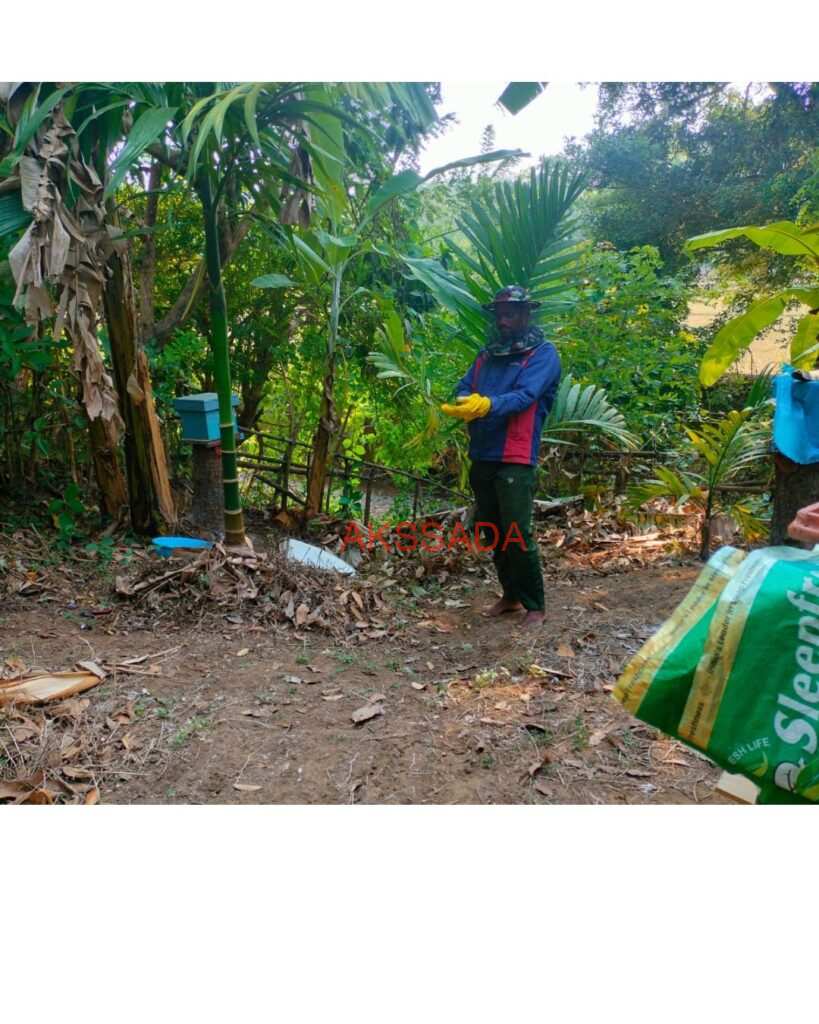
As the sun slowly began to set, Ravi and his cousins prepared for the harvest.
They brought out the protective equipment that had been provided during our earlier visit. One by one, they put on their safety suits, gloves, and veils before gathering the tools needed for the extraction process.
Watching them get ready was a proud moment.
Only a few months earlier, beekeeping had been a completely new activity for the family. Now they were confidently preparing to carry out their first honey harvest.
Months of learning and practical experience had clearly paid off.
With everything ready, the group walked towards the bee boxes while the rest of us followed closely behind.
Standing Beside the Bee Boxes
To be honest, I was a little nervous.
Although I had seen bee colonies before, standing close to active bee boxes during a harvest felt very different.
I expected the bees to become aggressive.
I imagined bees flying everywhere and people running for cover.
Instead, what happened surprised me completely.
The bees remained remarkably calm throughout the process.
The harvesting was carried out smoothly and methodically, with very little disturbance to the colonies.
As my confidence grew, I moved closer and began recording the entire process.
For the first time, I was able to observe the incredible world of honeybees from just a few feet away.
The Children Had No Fear
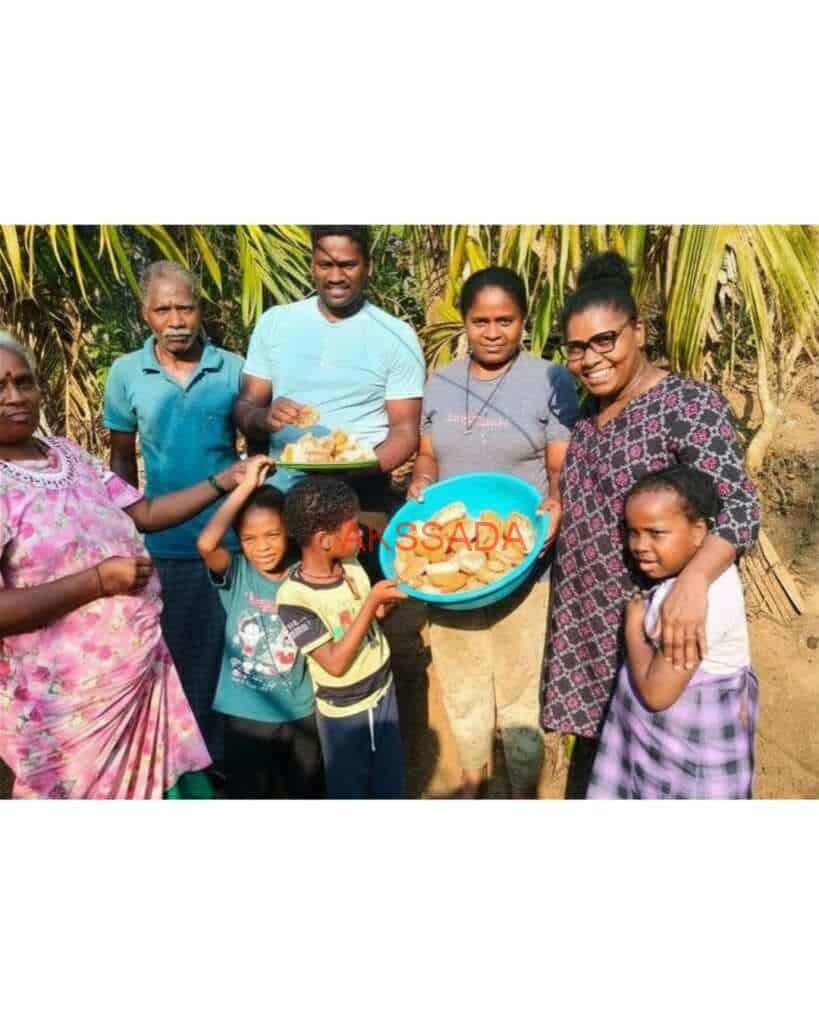
While the adults focused on the harvest, the children had their own adventure.
They ran around excitedly, trying to watch every step of the process.
I found myself constantly worrying that one of them might get stung.
Surprisingly, the bees seemed completely uninterested in the children and continued their work without paying much attention to the commotion around them.
Then came a moment that our daughter will probably never forget.
A bee gently brushed against her cheek as it flew past.
Instead of being frightened, she jumped with excitement and shouted,
“The bee! The bee!”
To her, it felt like a magical encounter.
Rather than fear, she felt wonder.
And in that moment, we realised how differently children experience the world when they are allowed to interact with nature directly.
The Moment Honey Began to Flow
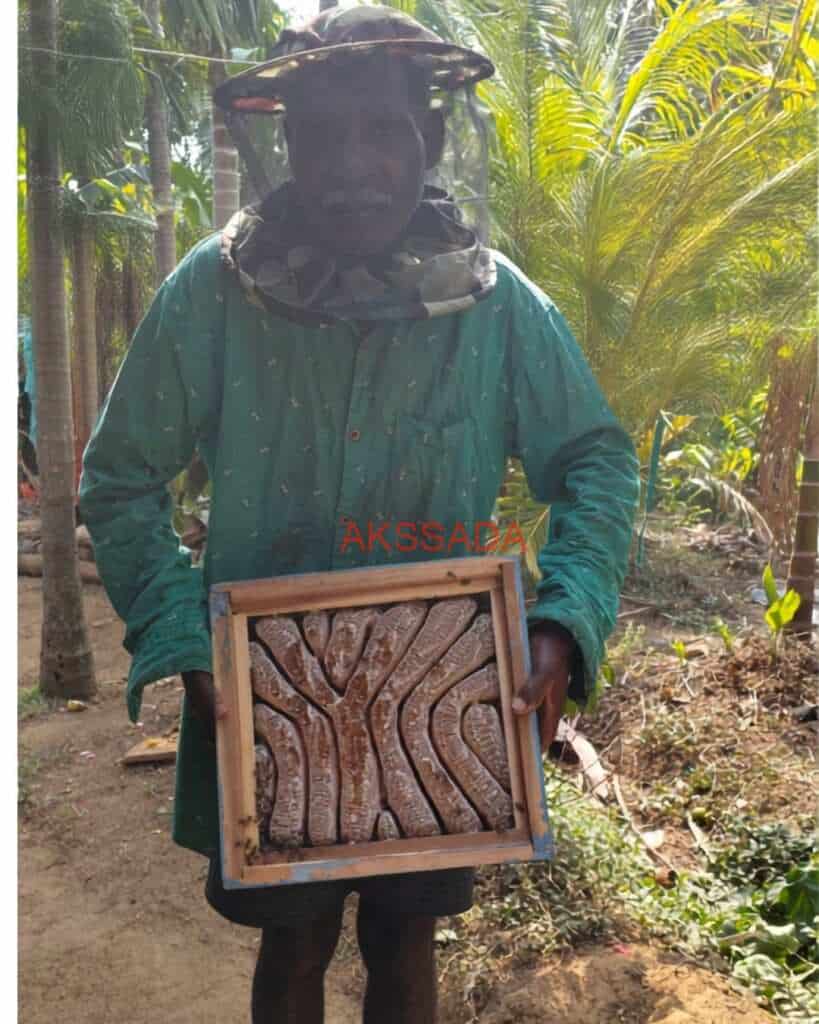
For the first harvest, we decided to extract honey from only two of the active colonies.
Out of the fifty bee boxes originally provided through community support, ten had successfully developed into active colonies. In addition, Ravi had independently managed and maintained four of his own bee boxes.
Together, this brought the total number of active colonies to fourteen.
As the honey-filled frames were carefully removed from the boxes, everyone gathered around to watch.
The honey extractor was prepared.
The frames were uncapped.
And slowly, the golden honey began to flow.
Watching the fresh honey emerge from the combs was a truly special experience.
Months of effort suddenly became visible in the form of liquid gold.
When the extraction process was complete, we weighed the harvest.
The result exceeded everyone’s expectations.
From just two bee boxes, nearly 10 kilograms of honey had been harvested.
For a few moments, nobody said much.
We simply stood there smiling.
The numbers represented much more than honey.
They represented hard work.
Patience.
Learning.
And proof that the initiative was working.
The Sweetest Reward of All
While the adults admired the harvest, the children were focused on something else entirely.
Fresh honey.
They had waited patiently throughout the entire process, cups in hand, eager for their turn.
Finally, the moment arrived.
Freshly harvested honey was shared with them straight from the extraction process.
Their faces lit up instantly.
Some asked for more.
Others proudly showed their cups to everyone nearby.
Laughter filled the air as they enjoyed the freshest honey they had ever tasted.
Watching their excitement was every bit as satisfying as the harvest itself.
In many ways, their happiness became the perfect celebration of the day’s success.
More Than Just a Honey Harvest
Once the extraction was complete, Ravi carefully filtered the honey and began filling storage bottles.
Then came another surprise.
He insisted that we take the entire harvest home with us.
We tried to explain that the honey belonged to his family.
After all, they had earned it through months of dedication and hard work.
But Ravi remained firm.
For him, the honey symbolised not only his family’s efforts but also the support and trust that so many people had shown throughout the journey.
As we sat together that evening, looking at the bottles filled with golden honey, it became clear that this was about much more than beekeeping.
This harvest represented confidence.
It represented self-reliance.
It represented the possibility of creating sustainable livelihoods within forest communities.
Most importantly, it demonstrated how a small initiative, supported by a group of caring people, could create meaningful and lasting change.
And as we looked at those bottles of honey, we all shared the same feeling.
This was only the beginning.
Living in the Heart of the Forest: A Night We Will Never Forget

By the time the honey harvest was completed, darkness had begun to settle over the forest.
The excitement and activity of the evening slowly gave way to a sense of calm. The bee boxes were quiet once again, the honey had been carefully stored, and everyone gathered around to relax after a memorable day.
Since we planned to spend the next two days with Ravi’s family, we would be staying at their home that night.
For our daughter, this was an adventure unlike anything she had ever experienced before.
A World Far Removed from City Life
Ravi’s home is located deep inside the forest, surrounded by nature on all sides.
The house itself is simple, built using wood and locally available materials rather than concrete and steel. It blends naturally into the landscape, reflecting the practical lifestyle of families who have lived in harmony with the forest for generations.
Although the house had electricity, life here was very different from what we are accustomed to in Mumbai.
There were no crowded streets.
No constant traffic.
No vehicle horns.
No brightly illuminated buildings.
No endless stream of notifications demanding attention.
Instead, there was something many of us rarely experience anymore.
Silence.
The kind of silence that allows you to hear nature breathing around you.
As Darkness Fell, the Forest Came Alive
As the sun disappeared behind the trees, the forest began to transform.
The daylight sounds gradually faded, replaced by an entirely different orchestra.
Crickets chirped endlessly.
Insects created rhythmic patterns of sound.
Leaves rustled gently in the evening breeze.
Occasionally, distant animal calls echoed through the forest.
Every unfamiliar sound immediately caught our attention.
Living in a city, we are used to understanding the noises around us. We know the sounds of traffic, construction, trains, and people.
The sounds of the forest were different.
They were mysterious.
Every rustle seemed important.
Every distant call sparked curiosity.
And every unexpected sound made us pause and listen.
“Will a Tiger Come Tonight?”
For our daughter, the experience was equal parts exciting and terrifying.
Having heard stories about wildlife in the forests surrounding Yellapur, her imagination was working overtime.
As darkness deepened, she became increasingly curious about the animals that might be nearby.
Every few minutes, she would ask another question.
“Are there wild animals here?”
“Do elephants come near the house?”
And eventually, the question she repeated most often:
“Will a tiger come tonight?”
Her eyes widened every time a branch snapped somewhere in the darkness.
What seemed ordinary to the family felt like a grand adventure to her.
When bedtime arrived, she made her decision very clear.
She would be sleeping right between us.
No negotiations.
No alternatives.
That arrangement, she believed, offered the best protection against any tigers that might decide to visit during the night.
Learning to Trust the Forest
To be completely honest, even we felt a little uneasy at first.
Spending a night in a house surrounded by dense forest was far outside our comfort zone.
The darkness felt different from anything we had experienced in the city.
It was deeper.
Quieter.
More complete.
There were no streetlights illuminating the surroundings.
No neighbouring buildings visible through the windows.
Beyond the small circle of light around the house, there was only forest.
For a while, we found ourselves listening carefully to every sound.
Trying to identify where it came from.
Wondering what animal might have made it.
But something remarkable happened as the night progressed.
Slowly, our nervousness began to fade.
The sounds that had initially felt unfamiliar became comforting.
The cool forest air drifted through the house.
Moonlight filtered through the trees.
The peaceful rhythm of nature replaced the stress and noise we had carried with us from the city.
One of the Most Peaceful Nights We Have Ever Experienced
Eventually, all our fears disappeared.
The forest that had seemed mysterious only a few hours earlier now felt calm and welcoming.
We slept deeply and peacefully.
In fact, it was one of the most restful nights we had experienced in a very long time.
There was no traffic outside the window.
No alarms.
No late-night noise.
Only the gentle sounds of nature continuing their timeless rhythm through the darkness.
Lying there, surrounded by the forest, we realised how disconnected many of us have become from the natural world.
In cities, we often spend our lives surrounded by noise, schedules, deadlines, and constant stimulation.
Here, life moved at a different pace.
A slower pace.
A healthier pace.
A pace that allowed us to simply be present.
That night reminded us of something important.
Nature has a remarkable ability to calm the mind, restore perspective, and bring a sense of peace that is difficult to find elsewhere.
As we drifted off to sleep beneath the forest canopy, we knew that the experiences of the day had already become memories we would cherish forever.
Yet another unforgettable day awaited us when the sun rose the following morning.
Becoming Part of Their Daily Life: Lessons from the Forest
The next morning began with the soothing sounds of the forest waking up around us.
As we stepped outside, the cool morning air greeted us, carrying the fresh scent of trees, earth, and the nearby stream. Sunlight filtered gently through the forest canopy, creating beautiful patterns of light and shadow around the house.
After the excitement of the honey harvest, this quieter morning gave us an opportunity to experience everyday life with Ravi’s family.
And that experience turned out to be just as memorable.
A Forest Adventure Through a Child’s Eyes
Our daughter woke up full of excitement.
The previous day had been packed with new experiences, and she could not wait to talk about them all over again.
She spoke about the bee boxes.
She spoke about tasting fresh honey.
She spoke about the stream near the house.
And, of course, she spoke about her adventures from the previous night.
One particular experience had left a lasting impression on her.
The outdoor toilet.
Located a short distance from the house, reaching it after dark had felt like a major expedition through the wilderness. The previous night, every shadow had seemed mysterious, and every sound had fuelled her imagination.
By morning, however, what had felt frightening had become an exciting story.
She enthusiastically narrated her “forest adventure” to everyone, complete with dramatic descriptions of the sounds she had heard and the animals she imagined lurking nearby.
For her, every moment was part of an unforgettable adventure.
Learning About Life Beyond the City
After a simple and delicious breakfast, we joined Ravi’s family in their daily activities.
Living in the forest requires constant effort.
Unlike city life, where most necessities are readily available, families here depend heavily on their own labour, knowledge of the forest, and seasonal opportunities for income.
One important source of livelihood is the collection of Non-Timber Forest Produce (NTFP), which includes products such as wild pepper, cloves, honey, medicinal plants, and other naturally available resources that can be harvested without cutting down trees.
During our visit, we spent time helping the family clean and sort wild pepper and cloves they had collected from the forest.
For us, this was a completely new experience.
The Hidden Effort Behind Forest Produce
As we worked alongside the family, we began to appreciate the tremendous effort involved in bringing forest products to market.
The process starts long before the products reach consumers.
Families often spend hours walking through forests to locate and collect the produce.
The collected material must then be carried back home, cleaned, sorted, dried, and prepared for sale.
Only after all this effort can it be sold.
Yet despite the hard work involved, many forest-dependent families receive only a small share of the final value.
Much of the produce is sold to middlemen, often at prices far below what consumers eventually pay in urban markets.
Watching this process firsthand gave us a deeper appreciation for the resilience and determination of families like Ravi’s.
It also reminded us how disconnected most of us are from the effort required to produce the things we consume every day.
Childhood Without Screens
While the adults worked, the children had already disappeared on their own adventures.
Our daughter quickly became inseparable from Ravi’s children.
Language was never a barrier.
Friendship found its own way.
Soon they were running through the forest together, climbing small slopes, collecting raw mangoes directly from the trees, and exploring every corner around the house.
One of their favourite places was the small stream flowing near the property.
The children spent hours splashing in the cool water, laughing, playing games, and creating memories that would stay with them long after the trip ended.
Watching them was a joy.
• There were no mobile phones.
• No tablets.
• No video games.
• No television demanding attention.
• Just nature, imagination, friendship, and freedom.
A Powerful Lesson About Happiness
As the day unfolded, we found ourselves reflecting on something surprisingly simple.
The children seemed genuinely happy.
Not because they had expensive toys.
Not because they had access to entertainment.
Not because they owned the latest gadgets.
They were happy because they were fully present in the moment.
They were exploring.
Learning.
Laughing.
Creating adventures from ordinary surroundings.
In many ways, they were experiencing a kind of freedom that modern childhood often lacks.
Watching them play reminded us that happiness is not always linked to possessions or comfort.
Sometimes it comes from connection.
Connection with nature.
Connection with family.
Connection with friends.
And connection with the present moment.
Understanding the Strength of Forest Communities
As the day progressed, we continued learning more about the realities of life in the forest.
The challenges are many.
Access to healthcare can be difficult.
Educational opportunities are often limited.
Income sources can be unpredictable and seasonal.
Yet despite these difficulties, we were continually inspired by the positivity, resilience, and resourcefulness of the people around us.
Families like Ravi’s have developed an extraordinary ability to adapt, support one another, and make the most of the resources available to them.
The more time we spent with them, the more we realised that while they may have fewer material possessions, they possess something equally valuable.
A strong sense of community.
A deep connection to nature.
And an unwavering determination to build a better future for their children.
As our visit continued, we began to understand that the impact of the beekeeping initiative extended far beyond honey production.
The real transformation was happening in the confidence, optimism, and possibilities it was creating for the future.
And soon, we would discover just how far that ripple effect had begun to spread.
A Ripple Effect Beyond One Family: How Beekeeping Is Inspiring an Entire Community
As our visit was drawing to a close, we experienced something that touched us even more deeply than the honey harvest itself.
The honey harvest had been a wonderful milestone, but what we witnessed over the following two days revealed a much bigger story unfolding within the community.
It became clear that the impact of this initiative was extending far beyond Ravi’s family.
Visitors Arriving from Nearby Villages
Throughout our stay, relatives, friends, and neighbours from nearby villages continued arriving to meet Ravi and his family.
Some travelled considerable distances through forest paths simply to see the bee boxes and learn more about the project.
Word had spread.
People had heard about Ravi’s success.
They had heard about the honey harvest.
And they wanted to see the results with their own eyes.
Groups gathered around the bee boxes, asking questions and listening carefully as Ravi explained his experiences.
For many of them, this was the first time they had seen organised beekeeping being successfully managed by someone from their own community.
The curiosity was genuine.
So was the excitement.
Beekeeping Dreams That Had Been Waiting for an Opportunity
As conversations continued, many visitors began sharing their own stories.
Several families already owned one or two bee boxes.
However, those boxes were often maintained only as a hobby or a small side activity.
The dream of expanding into larger-scale beekeeping had always remained out of reach.
The reasons were familiar.
Limited financial resources.
Lack of training.
The cost of equipment.
Uncertainty about where to sell the honey.
For years, these challenges had prevented many families from taking the next step.
Beekeeping remained an idea full of potential but difficult to pursue.
Listening to their stories, we realised that Ravi’s journey reflected the aspirations of many others living in similar circumstances.
The Hope in Their Eyes
What moved us most was not what people said.
It was what we saw.
There was hope in their eyes.
They were not looking at Ravi’s bee boxes.
They were looking at possibilities.
For perhaps the first time, they had seen someone from their own community successfully establish and manage productive bee colonies.
Someone who faced the same challenges.
Someone who lived under similar conditions.
Someone who understood their reality.
That made all the difference.
Success stories from distant places can feel inspiring.
But success stories from your own village feel achievable.
One elderly relative quietly shared a thought that stayed with us long after we left.
“If Ravi can do it, maybe our children can too.”
Those simple words captured the true significance of what was happening.
The project was no longer about honey.
It was becoming a source of inspiration.
A Growing Desire to Learn
As discussions continued, several visitors asked whether similar support, training, or guidance could be made available in their villages.
Others wanted advice on improving the bee boxes they already owned.
Many were eager to learn more about colony management, honey harvesting, and maintaining healthy bee populations.
What impressed us most was their attitude.
There were no demands.
No expectations.
No sense of entitlement.
Instead, there was genuine curiosity and a willingness to learn.
People wanted opportunities.
They wanted knowledge.
They wanted the chance to improve their livelihoods through their own effort.
That desire to learn is often the strongest foundation for sustainable change.
More Than Honey, More Than Income
As we listened to these conversations, we realised that the most valuable outcome of the initiative was not measured in kilograms of honey.
It was measured in confidence.
Confidence that change is possible.
Confidence that new livelihood opportunities can be created.
Confidence that families can take control of their own future.
The honey harvested from Ravi’s bee boxes represented income, but it also represented something much deeper.
Dignity.
Self-reliance.
Hope.
And perhaps most importantly, belief.
Belief that with the right support, training, and determination, meaningful change can happen even in remote forest communities.
The Beginning of Something Much Bigger
Standing there among the bee boxes, surrounded by families discussing possibilities for the future, we experienced a powerful realisation.
This journey was no longer about one family.
It was no longer about fifty bee boxes.
It was no longer even about honey.
It had become about creating opportunities.
It had become about inspiring confidence.
It had become about showing what is possible when communities are supported in building sustainable livelihoods.
The first honey harvest was an important milestone.
But it was also the beginning of something much larger.
A ripple effect that was already beginning to spread through neighbouring villages.
A ripple effect built on hope, learning, and shared success.
And as we listened to the conversations taking place around us, we could not help but wonder how many more families might one day benefit from the same opportunity.
The future suddenly felt much bigger than we had imagined when this journey first began.
A Final Stop Before Heading Home: Discovering Kalhali’s Cultural Heritage
As our time with Ravi’s family came to an end, we prepared to begin our journey back.
Leaving was not easy.
Over the previous two days, we had shared meals, conversations, laughter, and unforgettable experiences. What had started as a visit to witness a honey harvest had become something much more meaningful.
But before returning home, there was one more place we wanted to visit.
A nearby village called Kalhali.
Visiting a Family That Keeps Siddi Traditions Alive
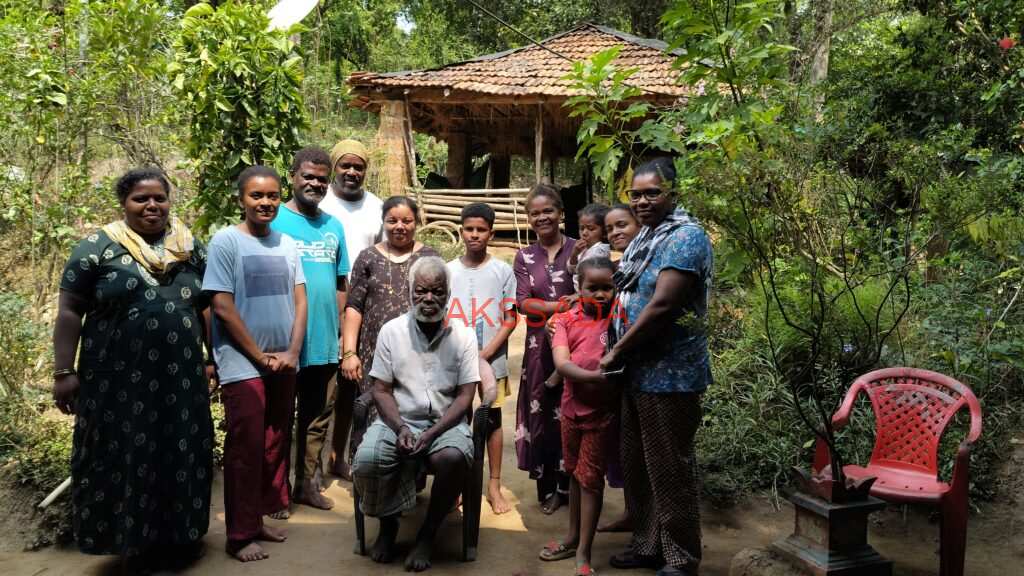
Kalhali is home to several families from the Siddi community, many of whom have preserved their traditional art, music, dance, and cultural practices for generations.
We were fortunate to spend time with one such family whose dedication to preserving their heritage was truly inspiring.
As we sat with them and listened to their stories, we learned how cultural traditions have been passed down from one generation to the next.
Despite changing times and modern influences, they continue to practise and celebrate the customs that form an important part of their identity.
During our visit, we had the opportunity to meet families who continue to preserve and practice these traditions, passing them from one generation to the next.
The stories we heard, the people we met, and the cultural experiences we witnessed deserve a dedicated article of their own.
Rather than trying to fit that story into this already memorable journey, we will be sharing our visit to Kalhali and the fascinating cultural heritage of the Siddi community in a future blog post.
For now, we leave you with a glimpse of what awaits.
As we began our journey back home, carrying bottles of honey and memories of our time with Ravi’s family, we also carried a renewed appreciation for the resilience, traditions, and rich heritage of the Siddi community.
And that is a story we look forward to sharing with you very soon.