
Wada (Wada Village Karnataka Siddi Community) | A Heartfelt Journey
There are places we visit, places where we live, and places that become part of who we are.
For me, Wada is one of those places.
Wada Karnataka Siddi community is part of the wider Siddi community living in Haliyal Taluk, Uttara Kannada district, Karnataka. Located in a forested and rural landscape near Haliyal, Wada has been home to generations of Siddi families. For me, however, Wada is more than a place on a map—it is a village connected to my childhood, family memories, and the changing story of the people who live there.
But Wada is not just a point on a map.
It is a place of childhood memories, family connections, faith, hardship, education, migration and change. It is also a place that has changed considerably over the years while still retaining the close community feeling that makes it special.
This is the story of Wada as I know it — the Wada I visited as a child, the Wada that became part of my life, and the Wada I see today.
Where Is Wada?
Wada is located in Haliyal Taluk, Uttara Kannada district, Karnataka, in the northern part of the state. Haliyal is the nearest major town and the headquarters of the taluk.
The wider area around Wada and Gardolli is characterised by rural settlements, agricultural land and forested terrain. Historical and contemporary sources describe Wada as a Siddi settlement in the interior of Haliyal Taluk.
Wada is reached from the Haliyal side through the rural road network, with Kesarolli serving as an important approach point. One recent local account places Wada at approximately 14 kilometres from Haliyal and describes the route as passing through agricultural areas, forest patches and undulating terrain.
The wider Haliyal region forms part of Uttara Kannada’s inland landscape, where the Western Ghats and forested areas influence the geography and way of life.
For visitors looking at a map, Wada may appear to be just another small settlement.
For the people who live there, it is home.
Wada Karnataka Siddi Community
The people of Wada belong predominantly to the Siddi community.
Siddis in this part of Karnataka have lived in settlements surrounded by forests and rural agricultural areas for generations. Research on Siddi settlements in Haliyal specifically identifies Wada and Gardolli among the Siddi settlements of the region.
The Wada community is predominantly Christian, and faith has an important place in village life. The Diocese of Karwar also describes the Wada-Gardolli area as predominantly inhabited by Christian Siddis.
But Wada is more than its religious or community identity.
It is a place where families are closely connected, where people know one another, and where memories of earlier generations remain part of everyday life.
The Landscape Around Wada
The journey to Wada is part of the experience.
As you move away from Haliyal and towards the settlement, the surroundings gradually become more rural. Agricultural fields, forest patches and undulating land form the landscape around the village.
A recent account of Wada describes the route through Kesarolli and surrounding agricultural and forest areas before reaching the settlement.
For someone coming from a city, the difference is immediately noticeable.
There is less traffic, less noise and more open space. The forest is not simply scenery. It has always been part of the environment in which people here have lived, travelled and worked.
The geography of Wada has also influenced its access to transport, education, healthcare and communication.
The Road to Wada: From Long Walks to the Village Bus
For many years, travelling to and from Wada was difficult.
Until the early 1990s, people from the village had to depend heavily on walking and whatever transport was available from nearby areas. According to the memories shared with me, people would walk long distances to reach Haliyal for markets, hospitals, official work and other needs.
The road itself was not always easy.
An account of Wada’s development records that villagers worked on a road during the early 1980s, but there was still no direct motorable road all the way to the settlement. Vehicles and buses could reach only part of the route, leaving villagers to walk the remaining distance.
Later, public transport became an important connection between Wada and Haliyal.
Two daily bus services became particularly important to the community — one in the morning and another in the evening. Recent reporting also describes a KSRTC bus serving the village twice a day.
For a village where people need to travel for school, work, healthcare and shopping, a bus is much more than a bus.
It becomes a lifeline.
The Bridge That Changed the Journey/Wada Karnataka Siddi Community
For years, streams and difficult road conditions created another obstacle, particularly during the monsoon.
People remember times when heavy rain made the journey difficult and vehicles could not always cross the route easily.
The construction of a new bridge brought an important change. A recent local report states that work on the Wada-Agasalkatta/Garadoli bridge began during the COVID period and was completed in 2023.
For people living in the village, improvements like this may seem ordinary to someone looking from outside.
But for a remote settlement, a safer and more reliable connection can affect almost every part of daily life.
My Childhood Memories of Wada
Although I settled in Wada only after marriage, I was born and brought up in Dandeli.
As children, we often visited Wada to meet my aunt.
Those visits remain among my strongest memories of the village.
We would walk along dusty roads surrounded by fields and forest. The journey itself was an adventure. We could hear birds and insects and the rustling of leaves. Sometimes the forest seemed so quiet that it was almost frightening.
We would stay close together, half scared and half excited, waiting to see the first houses of Wada.
The Bicycle We All Wanted to Ride
In those days, owning a bicycle was a luxury.
My cousin had one, and my brother and I would fight for our turn to sit behind him.
Today, it sounds like such a small thing.
But childhood is often made up of these small memories — the arguments, laughter, teasing and excitement over something that adults might not even notice.
Those memories are still part of what Wada means to me.
My First Visit to Wada
I still remember visiting Wada when I was in the fourth standard.
My cousin had returned from Kuwait and invited us for the church feast.
At that time, Wada felt like a very small village. From my childhood memory, there were around 30 houses.
Some men from the community had gone abroad for work, including to countries in the Gulf. Their stories were often spoken about with pride because going abroad represented an opportunity that was not easily available to everyone.
Life in Wada was simple.
People did not have much, but there was a strong sense of sharing and belonging.
For children like us, the open fields, trees, streams and freedom to run around made the village feel completely different from town life.
Faith and Community Life
Faith has always been an important part of life in Wada.
The village and surrounding area have a strong Christian Siddi presence. The Diocese of Karwar records the history of the Wada-Gardolli Catholic mission and describes the community as predominantly Siddi Christian.
The church and chapel have also been important places for prayer and community gatherings.
The Old Chapel and the Church Story
The history of the church in the Wada area goes back several decades.
According to the Diocese of Karwar, a chapel was built in 1936. The structure was later pulled down with plans to construct a larger church, but a land-related court case delayed reconstruction. The Diocese describes religious services continuing despite the absence of the earlier church building.
This history is important because it shows that faith in Wada is not simply about a building.
It is also about the people who continued to gather, pray and maintain their community life through difficult circumstances.
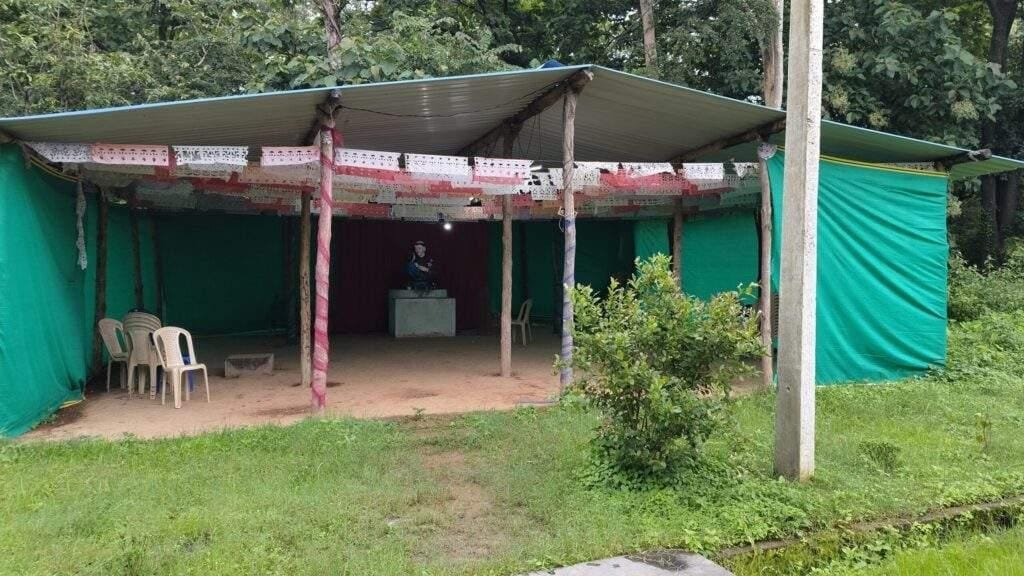
St. Anthony at the Village Entrance
At the entrance to Wada stands a statue of St. Anthony.
For people who know the village, it is a familiar sight — one of those landmarks that tells you that you have reached home.
For the community, it also reflects the importance of faith in village life.
Education, Poverty and a Parent's Sacrifice
Education did not come easily to earlier generations in Wada.
When the nearest higher-level schools were outside the village, children had to travel considerable distances. Transport was limited, and walking was often part of the daily routine.
For families already struggling financially, education could be difficult to sustain.
Many parents worked as daily wage labourers or depended on agricultural work. Some did not own enough land to support their families.
There were times when food itself was a concern.
Why Some Children Were Sent to Hostels
For some families, sending children to hostels was not simply an educational decision.
It was also about food and survival.
Parents knew that a child in a hostel could receive regular meals and continue studying.
I remember the sentiment expressed by parents in simple words:
“At least our children will eat well and study.”
Behind those words was a difficult decision.
Parents who had very little were still trying to give their children something they themselves had not been able to have — an education and a different future.
Work, Migration and the Contribution of Women
Traditionally, many men in Wada depended on agriculture and daily wage labour.
Women also worked to support their families.
For some women, domestic work in nearby Goa became an important source of income. They could spend long periods away from home, working in other people’s houses and sending their earnings back to their families.
The work was not always easy.
Some women experienced difficult working conditions, delayed wages or unfair treatment. Without education, savings or access to formal support, it could be difficult for them to challenge such situations.
Yet their income was important for their children’s education, food and household needs.
The contribution of these women is an important part of Wada’s history.
Life Before Electricity
There was a time when Wada had no electricity.
The evenings were lit by kerosene lamps.
Children studied under whatever light was available, while families gathered together after the day’s work.
Cooking was usually completed before the night became too dark. Once the evening meal was finished, families spent time talking, praying, singing hymns or simply sitting together.
There were no smartphones and no constant stream of information.
Life moved more slowly.
For today’s generation, such a life can be difficult to imagine.
For the older generation of Wada, it is a memory.
When Electricity Reached Wada
Electricity eventually reached the village in the early 1990s.
I remember hearing that the connection came through a government rural electrification programme, possibly under the Bhagya Jyothi scheme. Because I do not want to present that programme name as confirmed without documentary evidence, I would describe it simply as a government electrification programme unless we later verify the exact scheme.
Even one electric bulb made a major difference.
Children could study after dark. Families could stay awake longer. Homes became brighter and daily life became easier.
It was a small change that transformed the village.
Water and Everyday Life
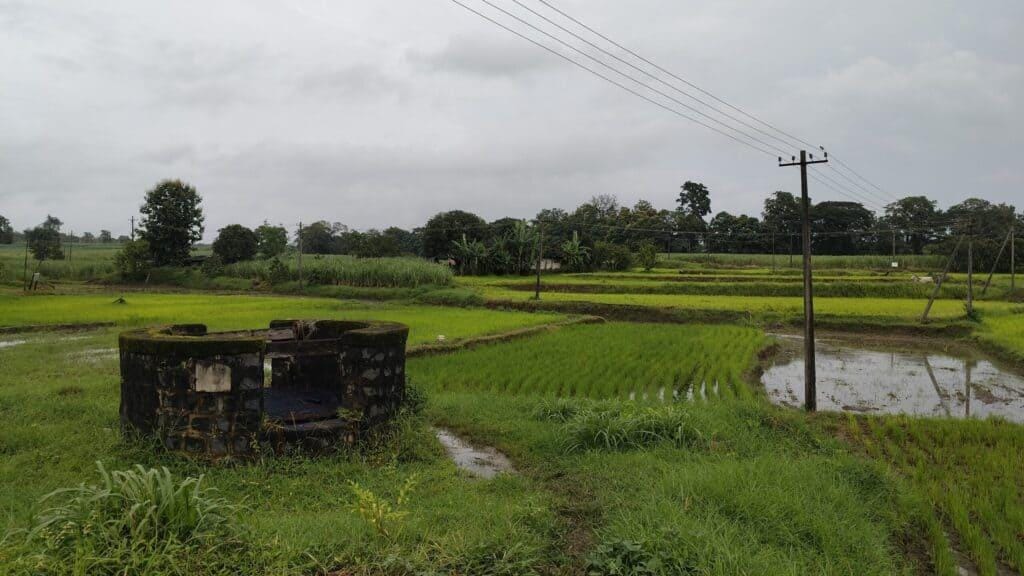
Water has also been part of the everyday story of Wada.
For decades, the village well was an important source of water for households.
A well may look like an ordinary feature of a village today, but when piped water and modern facilities are limited, such sources become central to everyday life.
Women and children often had responsibilities connected with collecting and managing water.
The well was not simply a water source.
It was also part of village life.
Staying Connected: The Phone Network in Wada
For a long time, mobile connectivity was another challenge.
The forested location and lack of a nearby mobile tower meant that getting a reliable signal could be difficult.
Even after mobile phones became common, people sometimes had to walk to particular spots to make or receive calls.
And sometimes, the best signal was higher up.
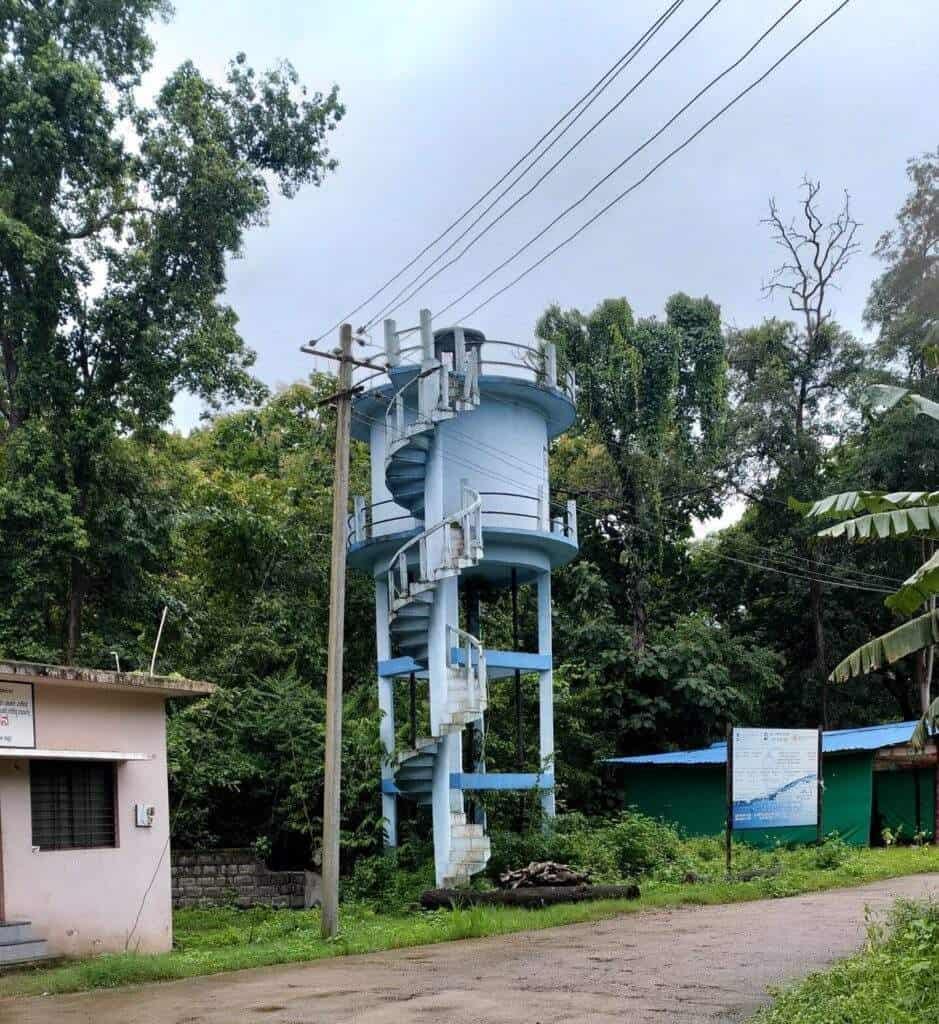
For visitors, climbing a water tank to make a phone call may sound funny.
For the people of Wada, it was simply part of everyday life.
Today, connectivity has improved in some areas, but the signal can still vary depending on location and conditions. Recent reporting has also highlighted the lack of a mobile tower and connectivity challenges in the area.
How Wada Has Changed
Wada has changed considerably over the years.
Homes have become stronger. Electricity, phones, vehicles and better access to roads have changed daily life.
Children have greater educational opportunities than many of their grandparents had.
The village has also become more connected with towns and cities as younger people travel elsewhere for education and employment.
But development has also changed some traditional ways of living.
The Disappearing Kitchen Gardens
When I remember the older Wada, many homes had small vegetable gardens.
Families grew vegetables and other food close to their houses. Extra produce could be shared with neighbours.
As more people began travelling for work and spending less time at home, some of these gardens gradually disappeared.
The land is still there.
The knowledge is still there.
And perhaps, one day, some of those gardens can return.
Education and a New Generation
One of the biggest changes I see in Wada is the importance given to education.
Parents today understand the opportunities that education can create.
Young people from the community have gone into different professions, including government service and other forms of employment.
This is a significant change from the days when poverty and limited access to education restricted the choices available to many families.
Education has not removed every challenge.
But it has expanded the possibilities.
From a Remote Settlement to a More Connected Community
Wada is still a rural settlement surrounded by the landscape that has always shaped its life.
But it is no longer as isolated as it once was.
Road improvements, buses, electricity, mobile phones, education and migration have connected the village with the wider world.
At the same time, some challenges remain.
Healthcare, transport, communication and employment opportunities continue to matter greatly to people living in remote settlements.
Recent reporting on Wada has also highlighted the absence of some basic facilities and the need to travel to Haliyal for certain services.
Development is therefore not a finished story.
Wada continues to change.
The Joy of Returning Home
Every time I visit Wada, I return feeling different.
The air feels cleaner.
The food tastes better.
The pace of life slows down.
We eat vegetables from gardens, fruits from trees and simple food prepared at home.
Perhaps the food itself has not changed much.
Maybe I have.
After years of city life, I notice things in Wada that I might have ignored when I was younger.
The quiet.
The open spaces.
The conversations.
The feeling of knowing the people around you.
Time Slows Down in Wada
In Mumbai, a day can disappear without us noticing.
In Wada, time feels different.
Mornings are quieter. Afternoons move slowly. Evenings invite conversation.
After more than twenty years of city life, returning to Wada reminds me that life does not always have to move at the speed of a city.
Sometimes, slowing down is also a way of seeing.
What Wada Means to Me
Wada has many stories.
Some are stories of hardship.
Some are stories of migration.
Some are stories of education and opportunity.
Some are simply childhood memories.
For me, Wada is special because I knew it before I lived there.
I remember coming here as a child, walking through the forest, visiting family, playing with cousins and looking forward to village celebrations.
Years later, I became part of this community through marriage.
The place I once visited became a place I could call home.
Wada Today: A Village Still Changing
The village has travelled a long way from the days of long walks, kerosene lamps and limited communication.
Today, children study, young people travel to cities for work and families remain connected through phones and improved transport.
Yet Wada still carries the memories of earlier generations.
The old paths, the well, the chapel, the fields, the forest and the familiar faces all form part of its history.
Wada may be small on the map, but its story is much larger.
It is a story about a Siddi community that has lived through hardship, adapted to change and continued to build a future for its children.
And for me, Wada will always be more than a village in Karnataka.
It is a place where my childhood memories, my family and my present life meet.
It is home.